
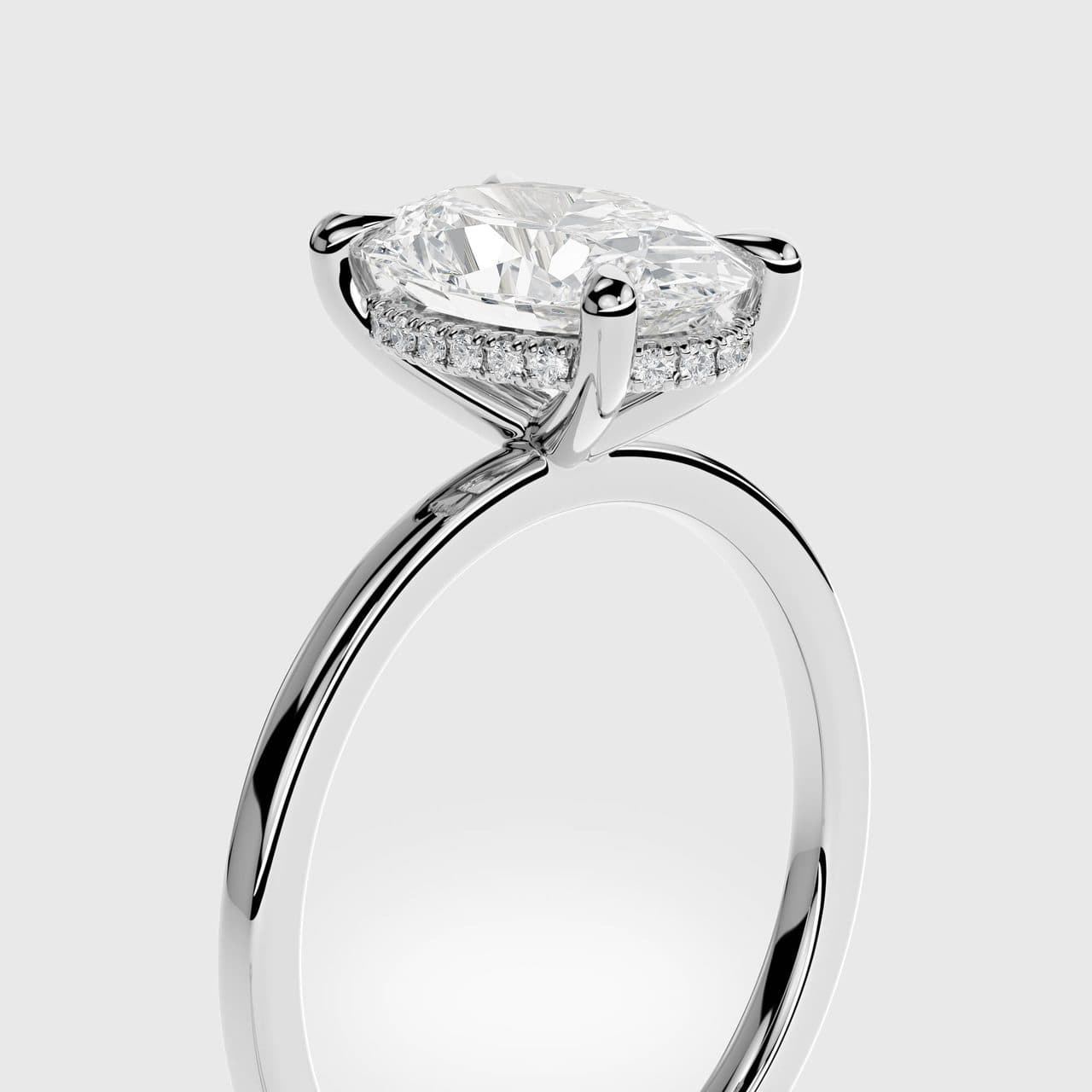
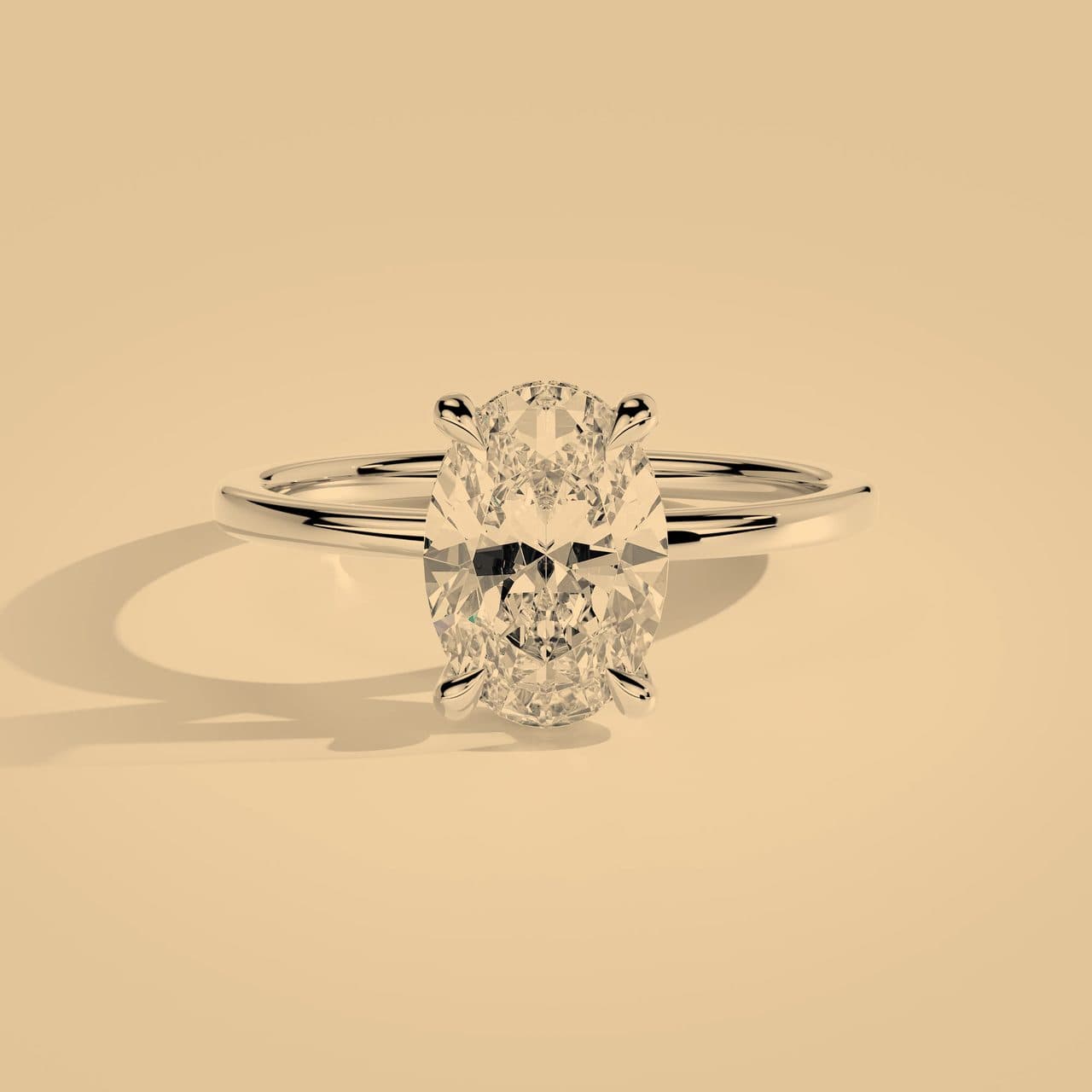
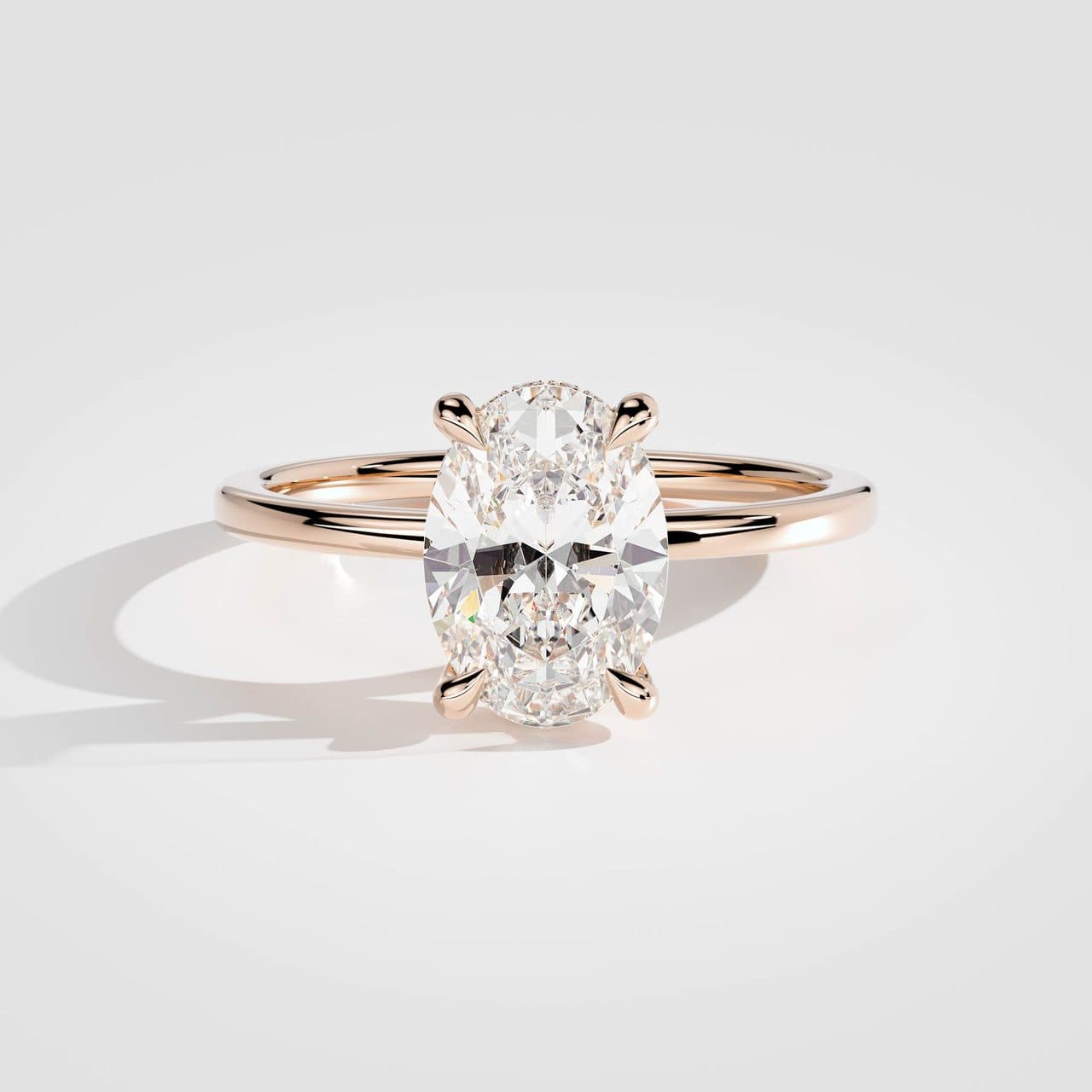
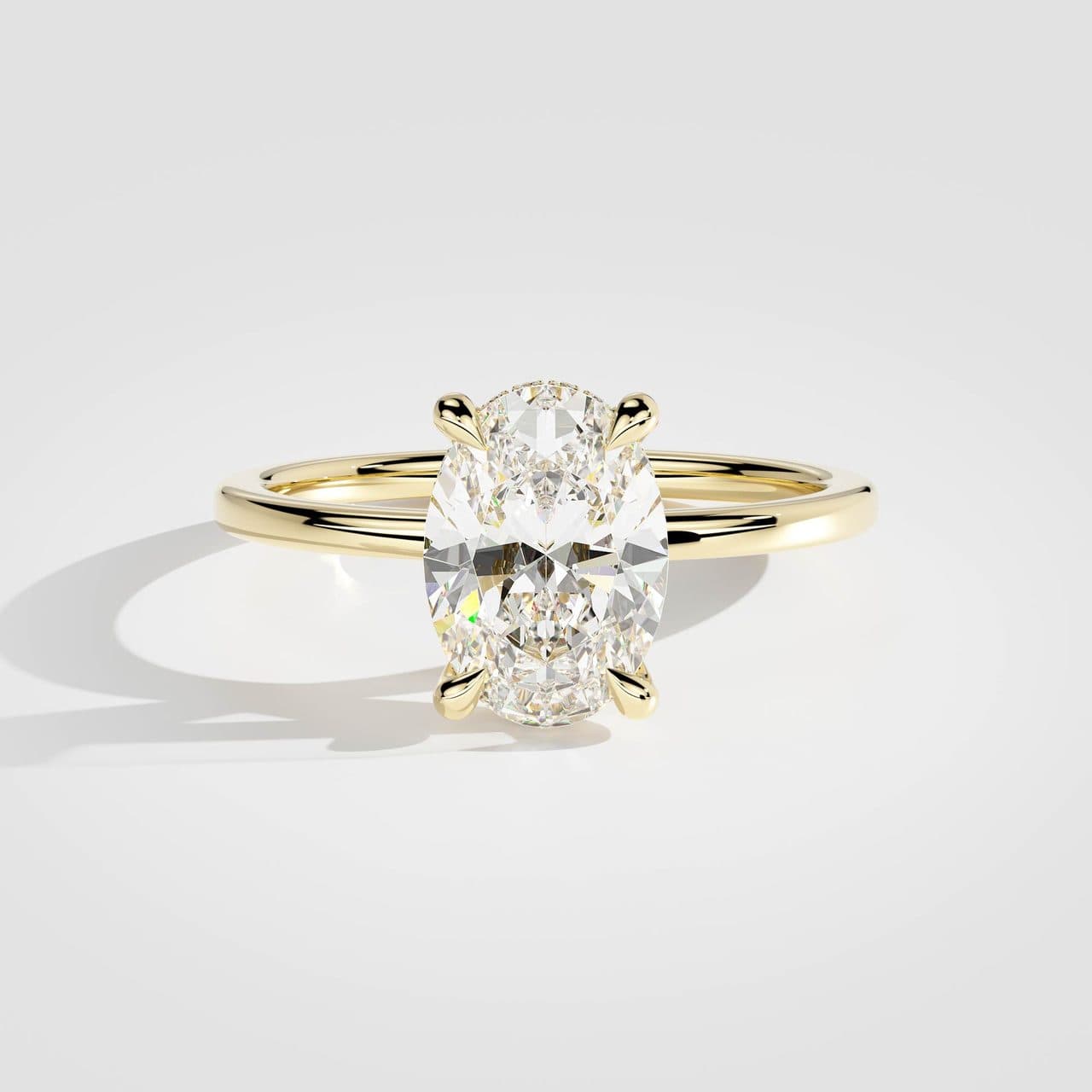
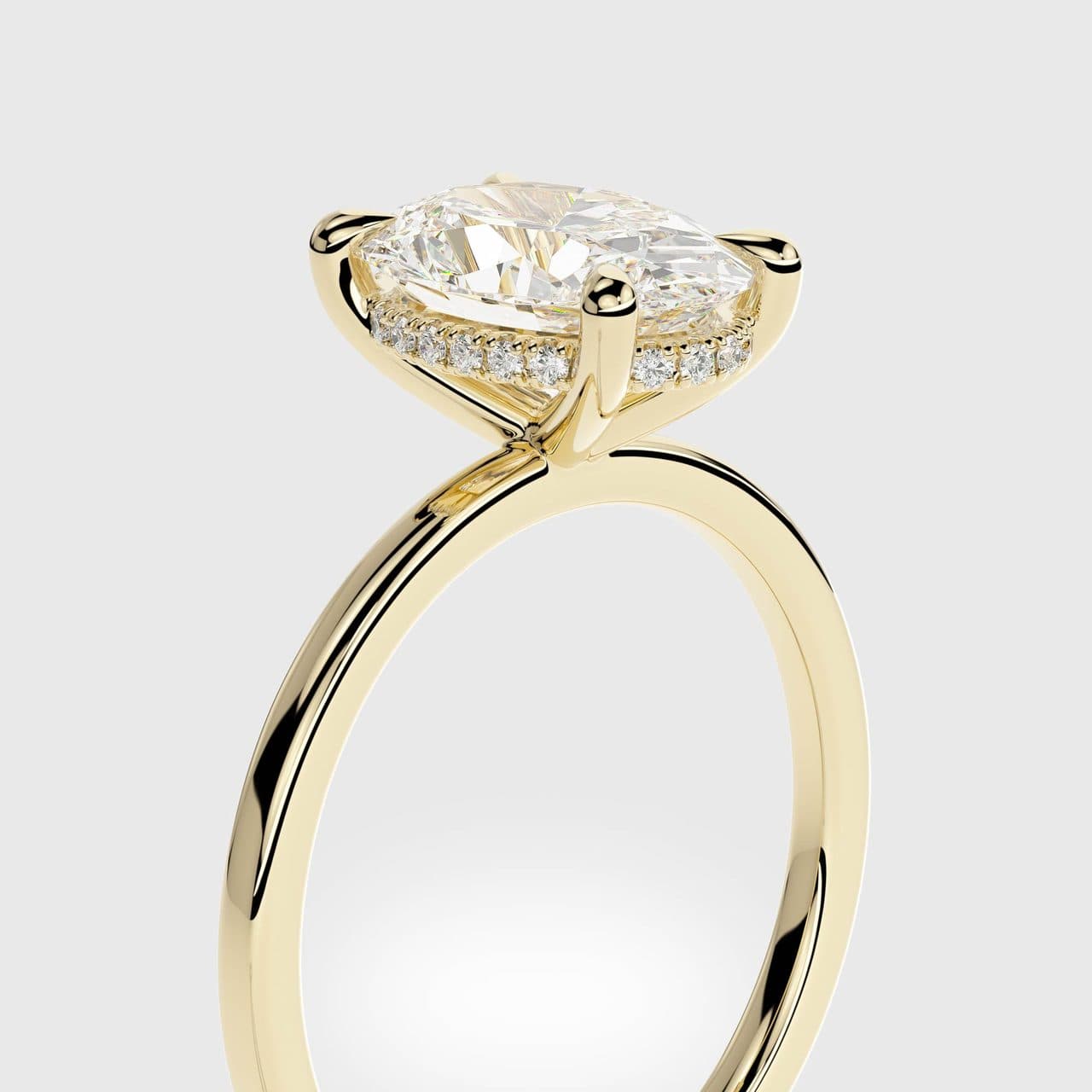
Most revision notes are easy: a thinner band, a lower head, a stone a quarter of a millimetre bigger. A few are impossible, and not because the software can't do them — because light can't. A matte band with a crisp reflection in it. A white gold ring that is white in the render and yellow on the kitchen table. The sparkle from a phone photo, please, but on our ring. None of these is an unreasonable thing to want, and every one of them has an answer that starts somewhere a jewelry brief rarely does: in physics. The ring in this post — an oval solitaire with a hidden halo, rendered in three golds under one studio light — is a useful witness, because everything it does on screen it does for a reason.
The requests we hear most
They arrive in roughly the same words, from brands and private clients alike. Each sounds like a styling note. Each is really a question about the surface, the lamp or the camera — and answering the question is quicker than rendering around it.
- “Make it shinier, but keep it matte.”
- “Why does the white gold look yellow when I show it at home?”
- “Can you add the sparkle from this photo?”
What a surface actually does with light
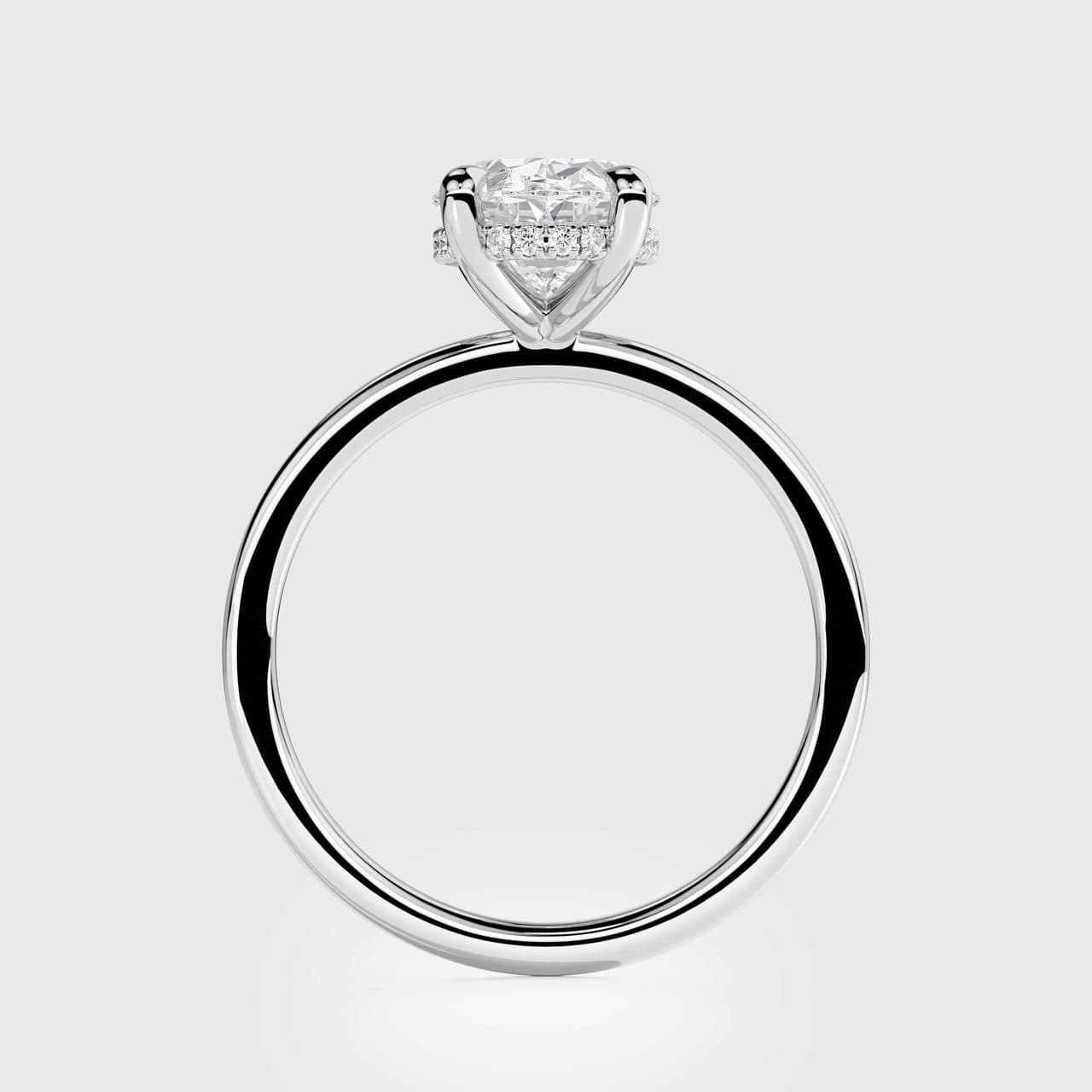
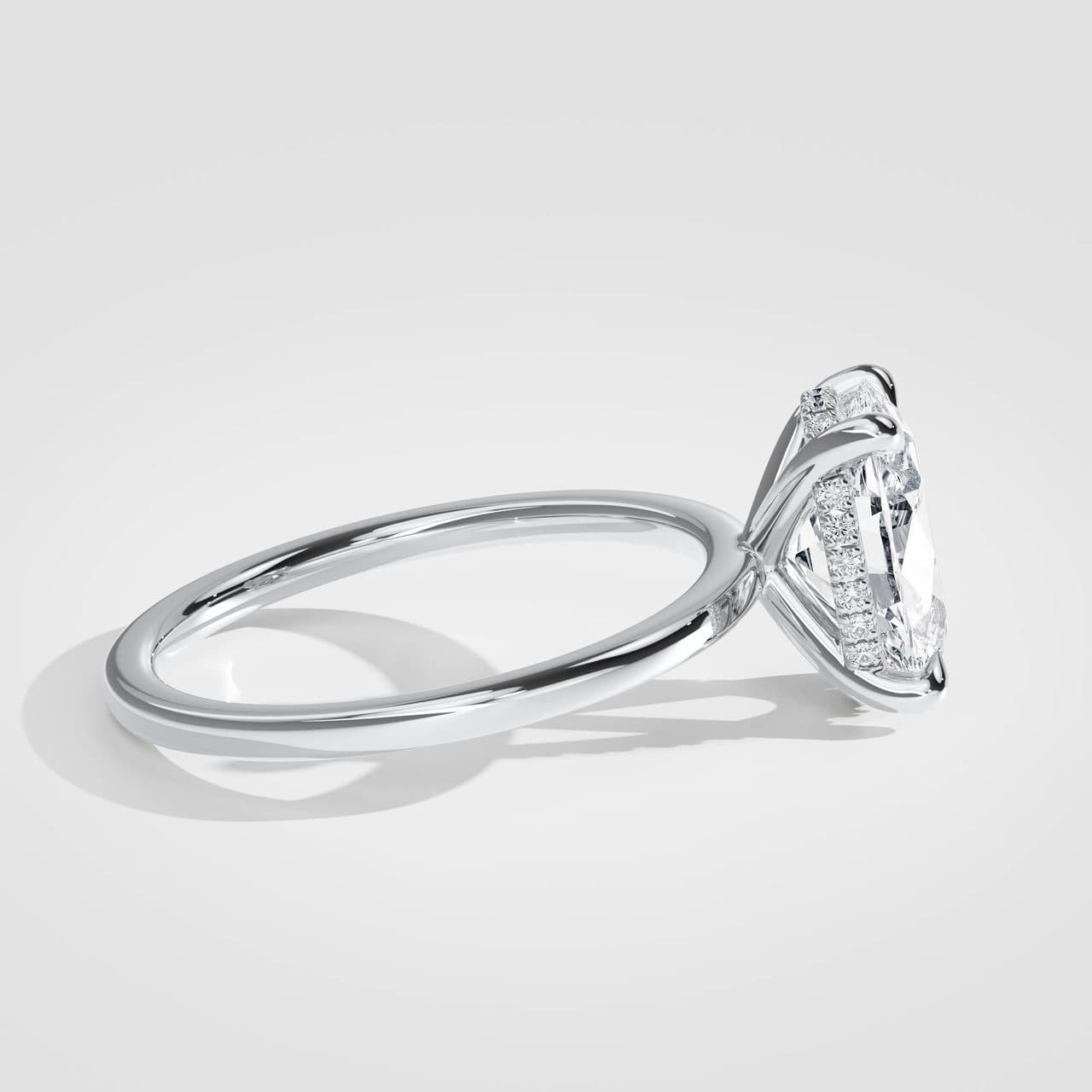
Every reflection is a surface reporting on its surroundings. Polished gold is close to a mirror: light leaves at the same angle it arrived, so you see a sharp image of whatever is around the ring — the softbox, the window, the photographer. That is a specular reflection, and it is why the band in the views below carries bright streaks and clean dark edges. Those are the studio lights, not the metal.
Brushed and sandblasted gold are covered in microscopic scratches and pits — microfacets — each tilted a slightly different way. Light still bounces off every one of them, but in a thousand directions at once, so instead of an image you get a soft glow. Renderers call this roughness. Brushing is rough in one direction, which gives the long satin streak along the band; sandblasting is rough in every direction, which gives the even, velvety finish.
So a reflection on a matte surface isn't an effect we forgot to switch on. Matte is the absence of that reflection. We can lower the roughness until a blurred reflection appears, but by then the surface is a satin or a semi-polish, and the ring will have to be finished that way at the bench. “Shinier but matte” usually means one of two real things: polished with matte details, or a softer satin all over. Both are lovely. They are just two different specs.
| Finish | What light does | How it reads |
|---|---|---|
| Polished | Reflects in one direction, like a mirror | Sharp highlights, dark edges, a picture of the room |
| Brushed / satin | Spreads along the brush lines | A soft streak that follows the form |
| Sandblasted | Scatters in every direction | An even glow, no reflections, colour reads lighter |
Why the same ring looks yellow at home
Light has a colour, measured in kelvin. A warm living-room bulb sits around 2700 K: rich in red and orange, short on blue. Daylight sits around 5500 K and is far more even across the spectrum. A metal can only reflect the light that reaches it, so under a warm bulb white gold has very little blue to give back and turns creamy. Rhodium plating doesn't fix that; it simply reflects the warm light very efficiently.
Diamonds suffer more. Their fire comes from splitting white light into colours, and their brilliance from small, sharp light sources. A ceiling bulb behind a lampshade offers neither — warm, large and soft — so stones look sleepy indoors and wake up by a window or under the hard spots of a jewelry counter. Yellow and rose gold go the other way: warm light flatters them, and cold daylight can make them look a touch pale.
Our eyes adapt to most of this within minutes, which is why a white shirt still looks white at home. A camera and a screen don't. They show the shift, and a client holding a phone photo taken under a lamp next to a render on a neutral studio background is comparing two lights, not two rings.
Why a phone photo and a render will never match
A phone photo of a real ring is a record of one room, one lens and a stack of processing decisions. The phone sharpens, lifts saturation and picks a white balance on its own. The sparkle in it comes from whatever happened to be overhead — often a few bare LEDs that turn every facet into a pinpoint. To copy that sparkle into a render, we would have to copy the ceiling too.
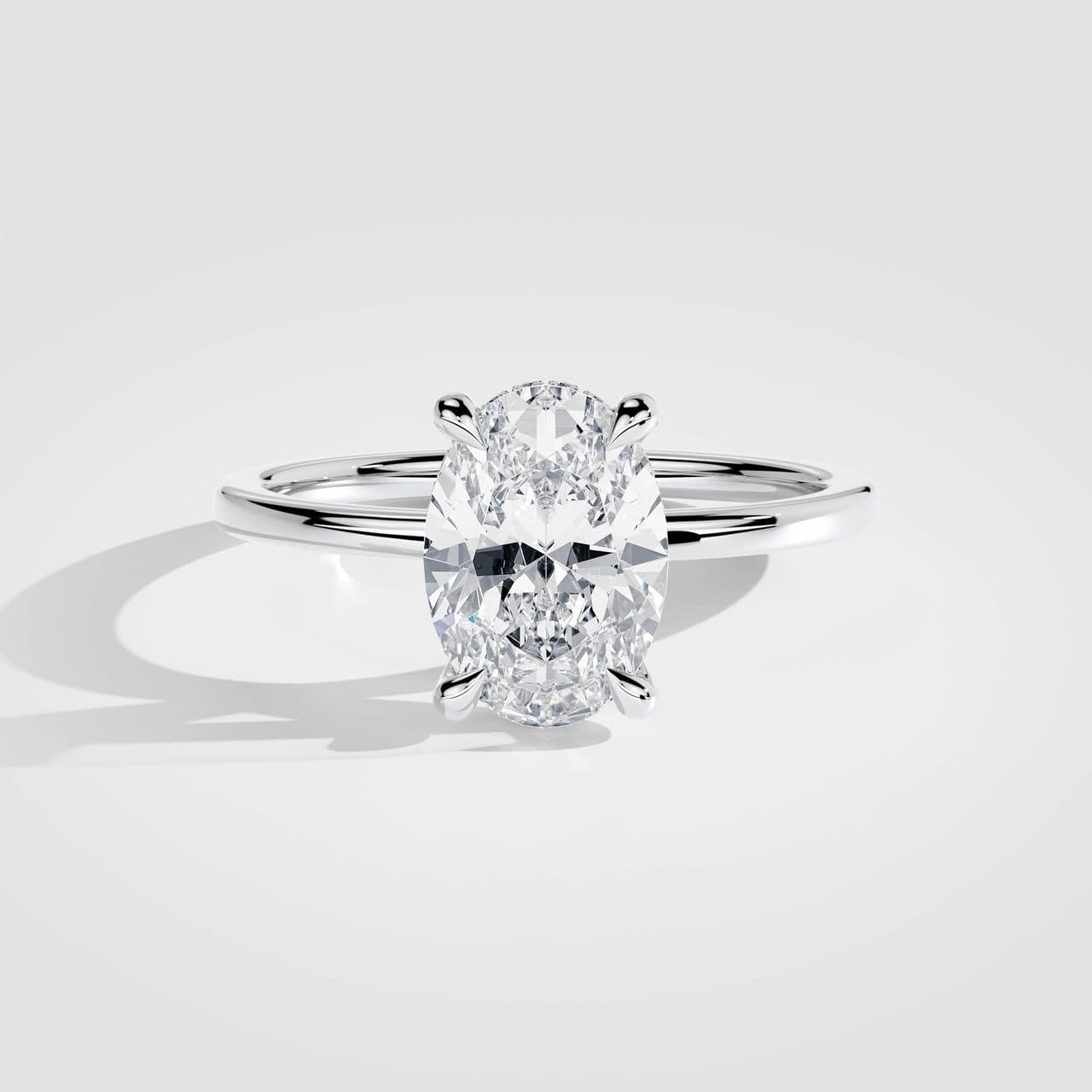
A render is the opposite. Every light is chosen, and the materials are set from measured values for the alloy and the stone. That is the point of it — it describes the ring, not the room — but it means the two images can agree on the design and still disagree on the mood. The turntable below makes it visible: the metal never changes, yet every reflection slides across the band as the ring turns, because the reflections belong to the studio.
What we do instead
We stopped debating light and started agreeing on it at the beginning. On a new project that comes down to three habits:
- Agree the reference light before the first render. Usually that is neutral studio light close to daylight, because it is the most honest about metal colour and it is what marketplaces expect. If the brand's boutique or packaging is warm, we match that instead — on purpose, and written down.
- When a client is unsure, show two or three lighting setups side by side on one frame: neutral studio, warm interior, hard counter spots. Choosing between three pictures takes a minute. Describing a light in words takes a revision round.
- Note the finish on the spec, surface by surface: polished band, sandblasted inside shank, satin gallery. The render follows the spec and so does the workshop, so the ring that arrives matches the image that sold it.
Why it saves a round
Most second and third revision rounds we see aren't about the design. They are about light: a finish nobody wrote down, a reference photo taken under a different lamp, an expectation set by a phone screen. Ten minutes on the physics at the brief stage — which finish, which light, which reference — usually removes one of those rounds entirely. The conversation that follows is about the ring, which is the conversation everyone wanted to have in the first place.
If you have a piece and a photo you love but can't reproduce, send both. We will tell you what the light in the photo is doing and render the ring in it, or in something kinder. The details are on the rendering page and in how it works; when you are ready, tell us about the piece.
Key takeaways
- A reflection is the surroundings, mirrored. Polished metal shows it; matte metal scatters it — that is what matte means.
- “Shinier but matte” is really a choice between polished-with-matte-details and an all-over satin. Both are valid specs.
- Warm 2700 K room light makes white gold look creamy and diamonds dull; daylight does the opposite, and flatters yellow and rose gold less.
- A phone photo records a room and a phone's processing; a render records the ring. Expect them to agree on design, not on mood.
- Agree the reference light and write the finish per surface before the first render — it saves a revision round.
Frequently asked questions
Can a matte or sandblasted ring show a reflection in a render?
Not a sharp one. A matte finish scatters light in many directions, which is exactly why it looks matte. Lowering the roughness until a reflection appears turns the surface into a satin or semi-polish, and the real ring would have to be finished that way too.
Why does my white gold ring look yellow at home but white in the render?
Most home lighting is warm, around 2700 K, with little blue in it. White gold reflects what reaches it, so it looks creamy indoors. Renders are usually lit with neutral light close to daylight, around 5500 K, which shows the metal's own colour.
Can you match the sparkle in a photo of a real ring?
Often, yes — by matching the light rather than the sparkle. Sparkle comes from the number, size and position of light sources and from the camera's processing. Send the photo and we will recreate the lighting setup, or show it side by side with a neutral one so you can choose.
Further reading
Have a piece you need in 3D?
Fixed pricing, real-time tracking, manufacturing-ready files — delivered worldwide.
Request a quote