
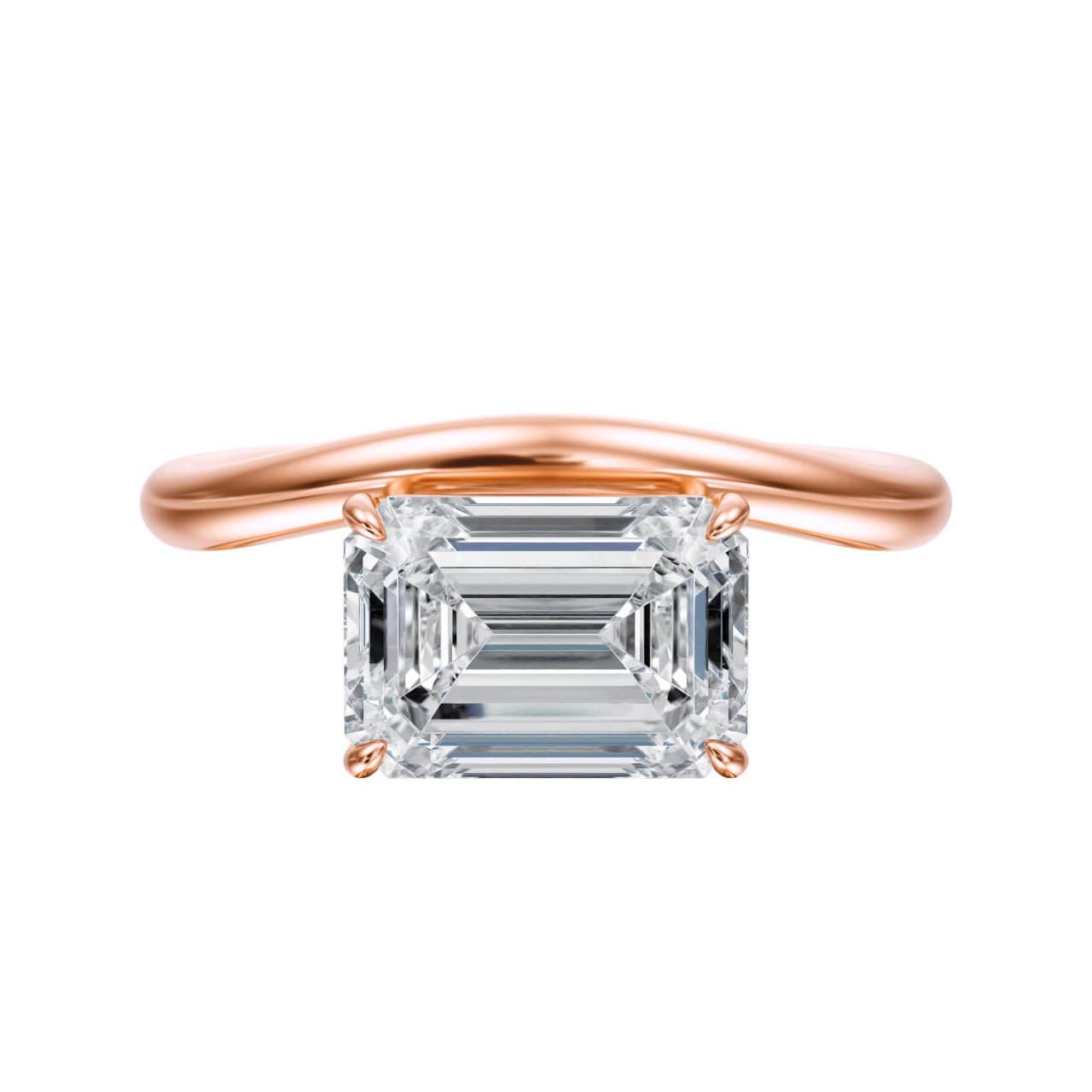
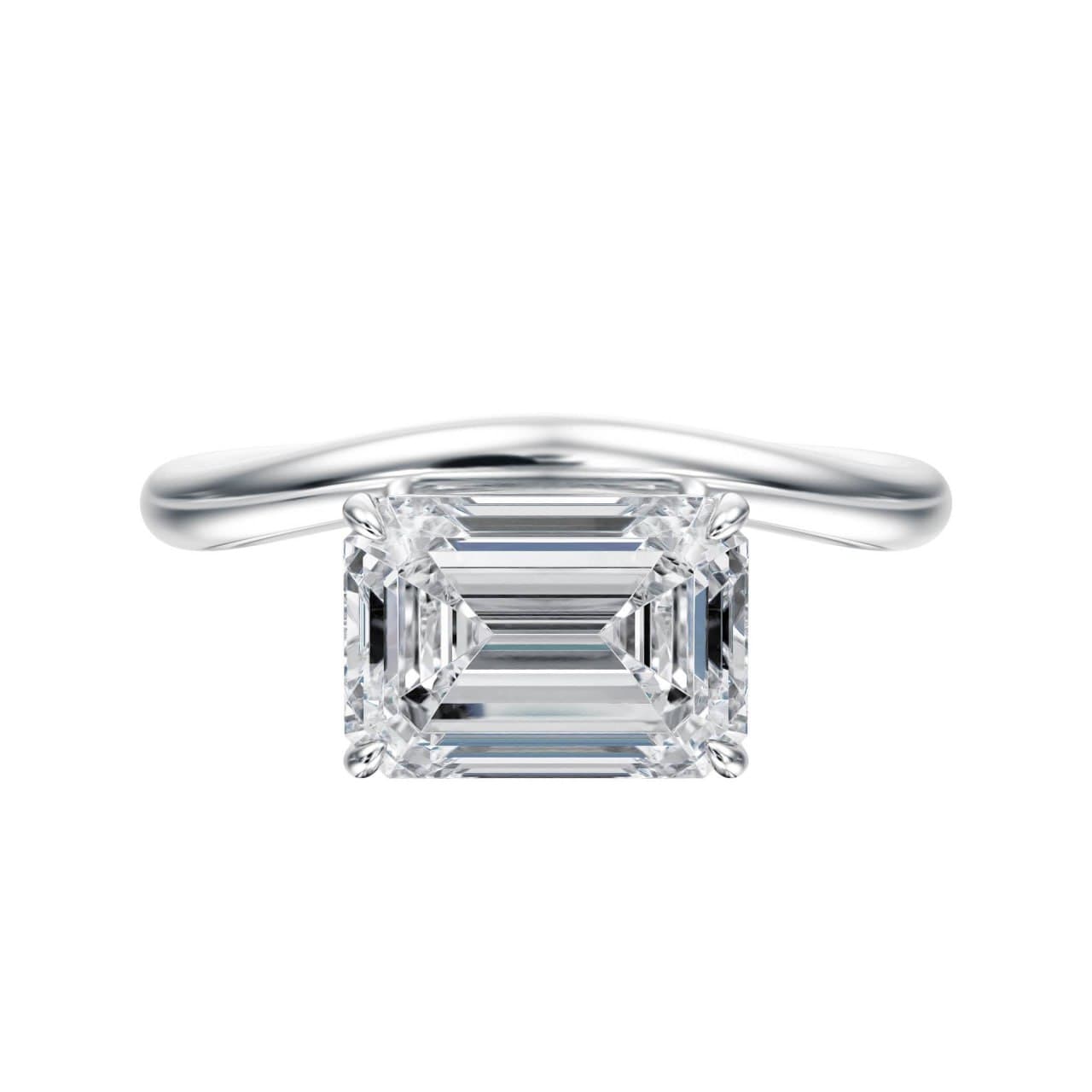
Look at what's on American hands right now and you'll notice something: the rings got quieter. The triple halo and the crowded pavé cluster are giving way to a single clean stone on a slim band — often an elongated fancy cut, frequently turned sideways. The ring on this page is a perfect example: an emerald cut set east-west (horizontally) on a softly contoured band, nothing else competing for attention. It's the look defining the moment. Which raises the question every jeweler and brand is quietly asking: is minimalism a genuine shift in taste, or has the industry simply discovered that these rings are easier and more profitable to sell? The honest answer is both — and understanding why is the difference between riding this trend and being left behind by it.
The ring that defines the moment
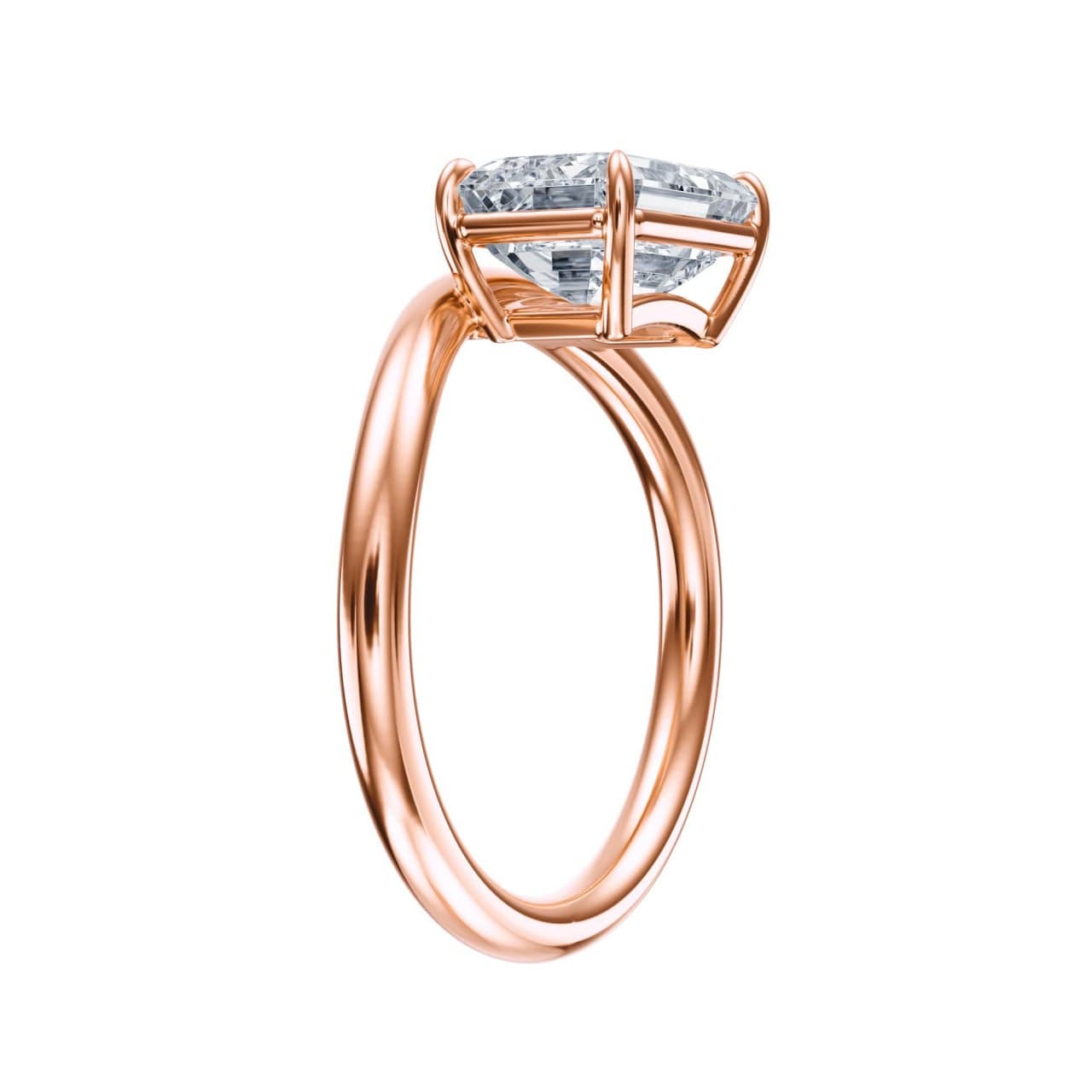
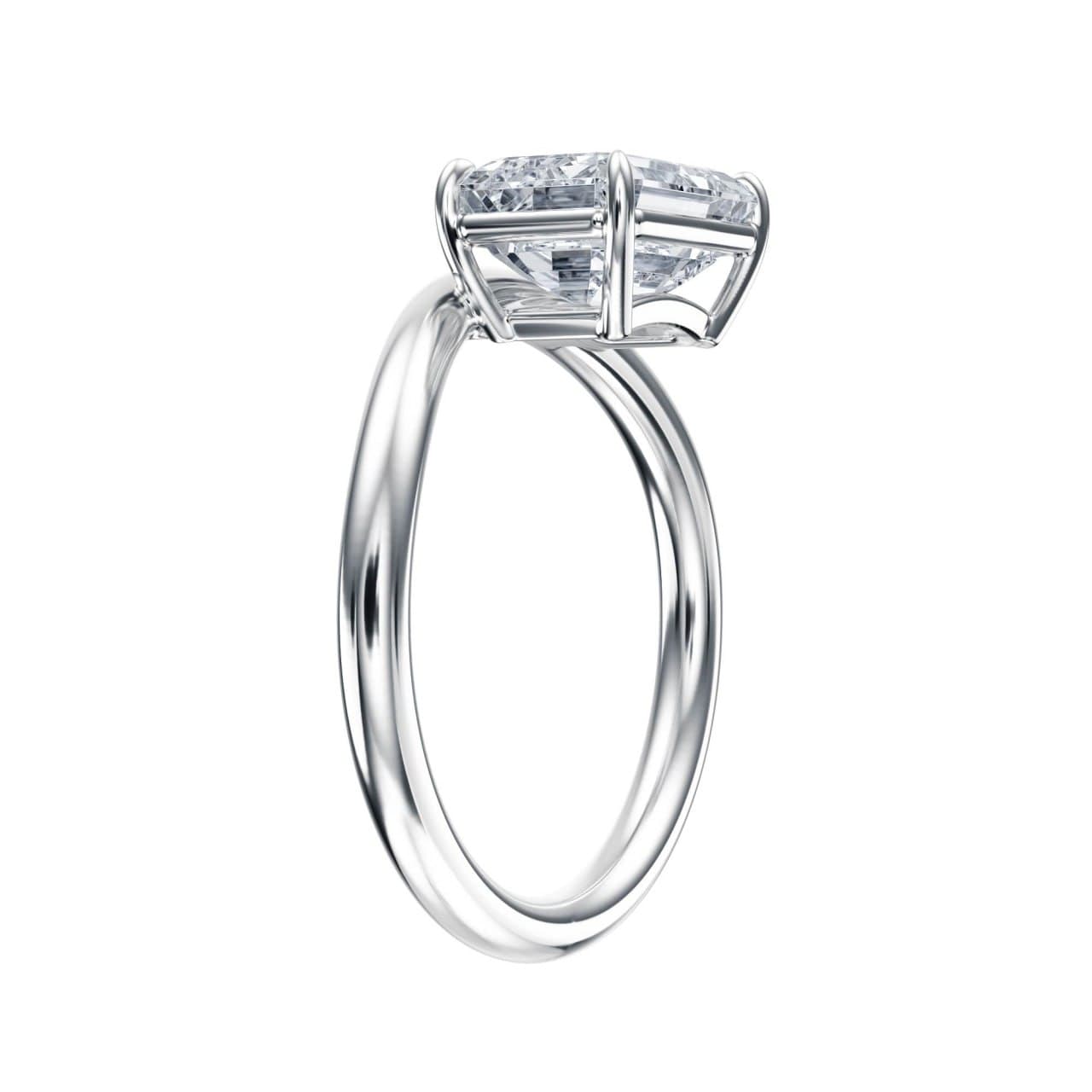
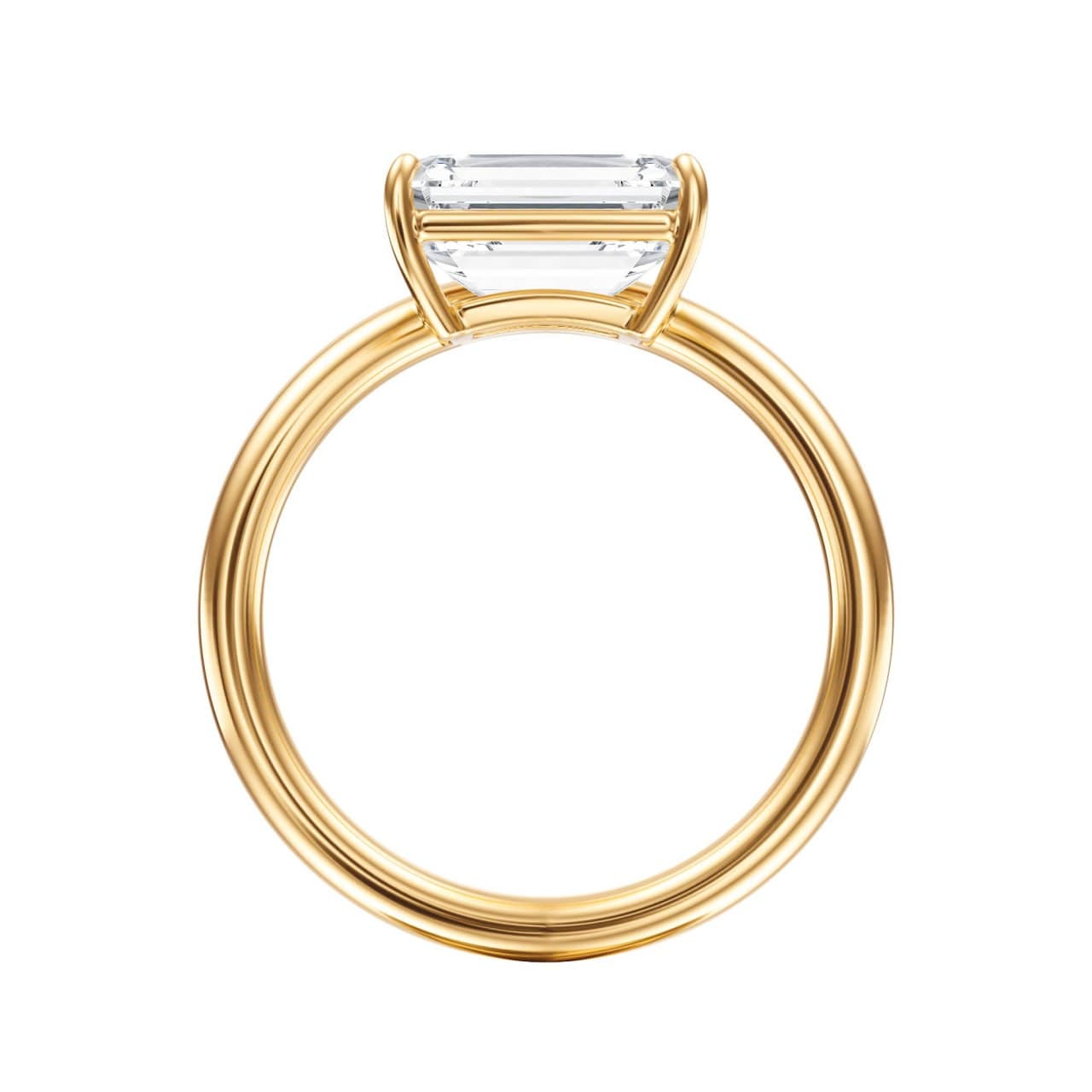
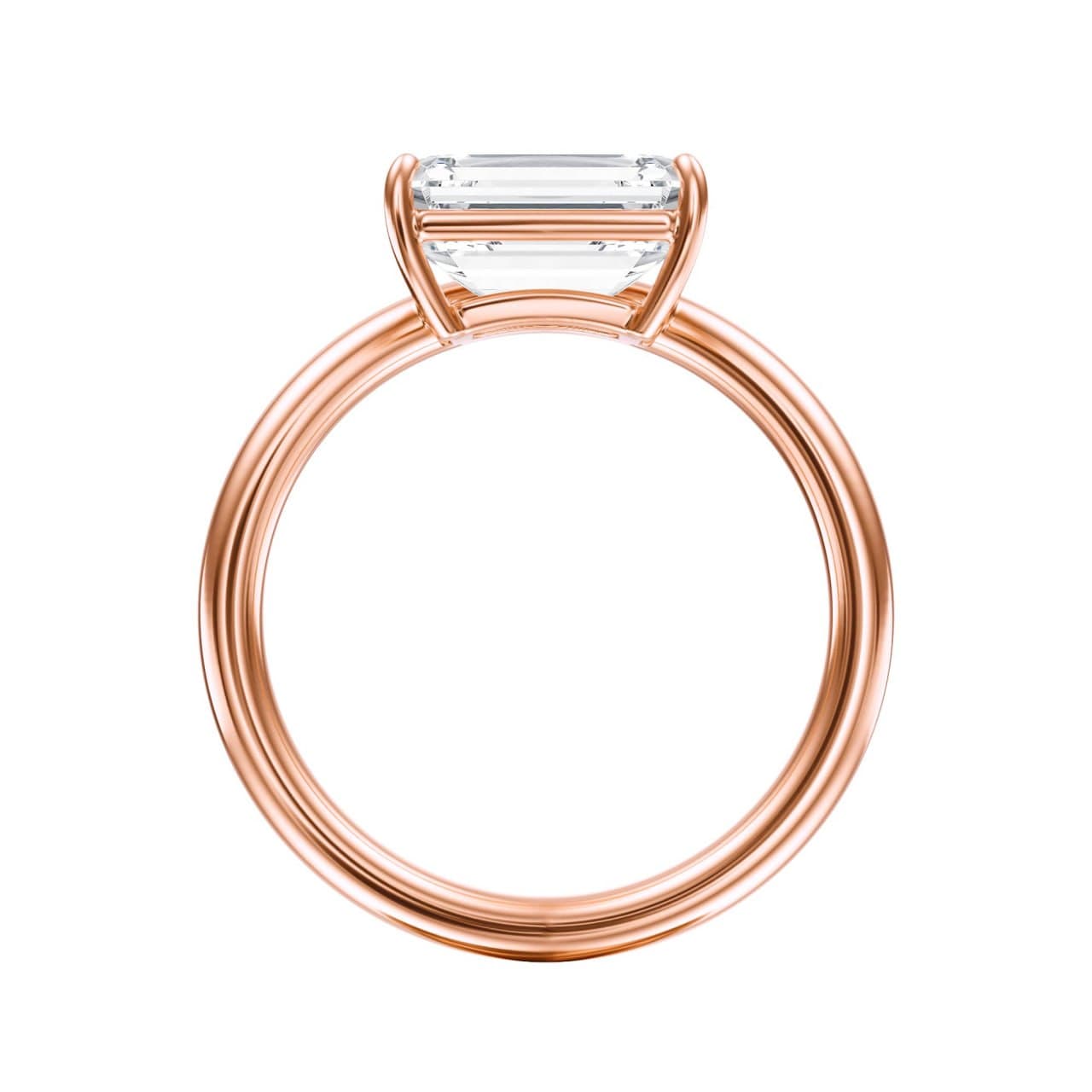
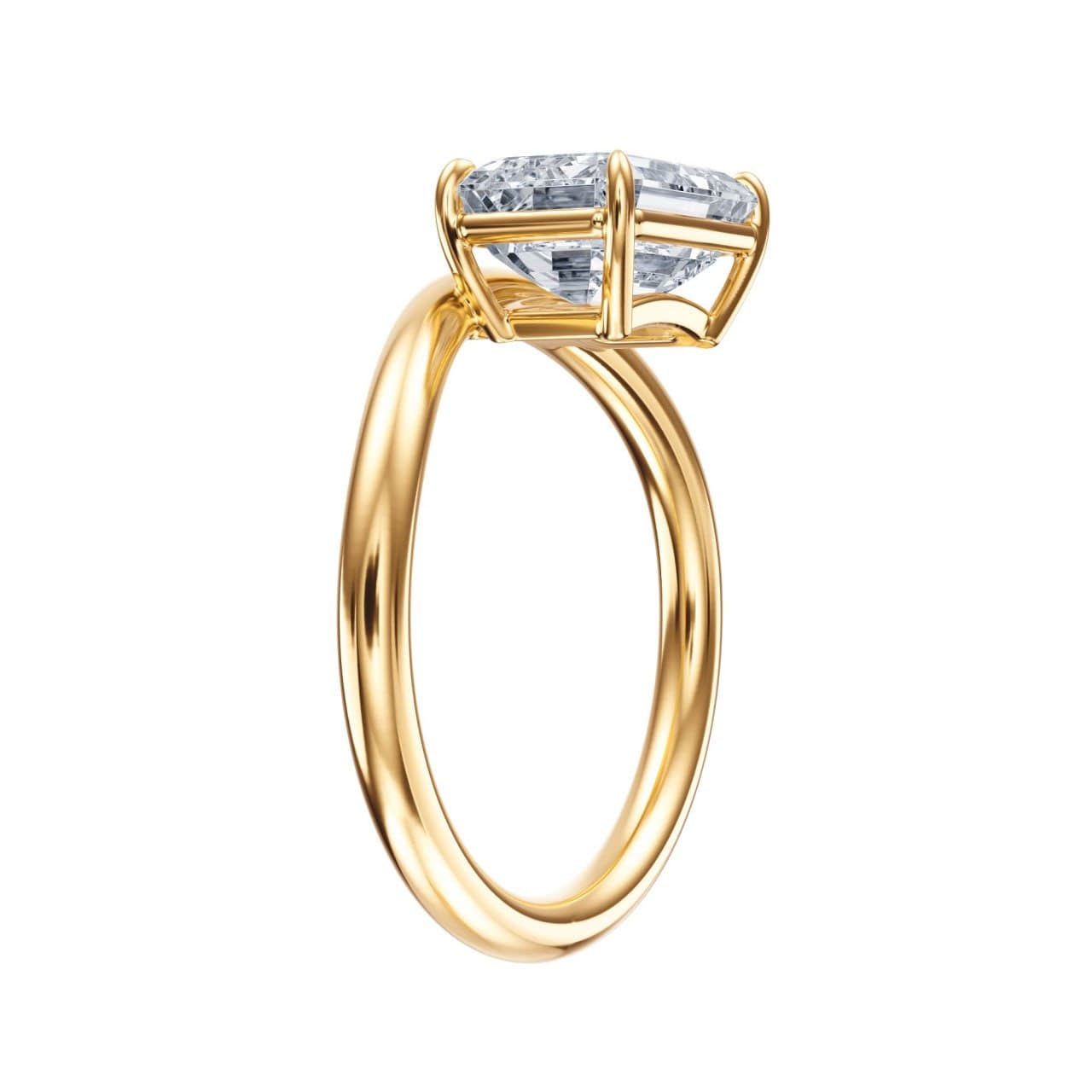
This is the archetype of the current US aesthetic: a single emerald-cut diamond, set east-west (turned horizontally instead of the traditional vertical), held by four slim claw prongs on a gently contoured band with no side stones, no halo and no pavé. Every element that a 2010s ring would have piled on has been stripped away. What's left is the stone, the metal and the proportions — and that restraint is exactly the point.
It reads as modern, editorial and quietly expensive. The east-west orientation makes it feel intentional and a little fashion-forward; the elongated emerald cut looks larger for its weight and flatters the finger; the clean band puts all the emphasis on the diamond. This is minimalism doing real work, not just doing less.
What “minimalist” actually means right now
Minimalism in engagement rings isn't one shape — it's a whole vocabulary that has replaced the maximalism of the last decade. If you're tracking the US market, these are the signatures buyers are actually asking for:
- The solitaire, resurgent: a single stone, front and center, is the defining silhouette again after years of halos.
- Elongated fancy cuts: emerald, oval, elongated cushion and radiant — shapes that look larger, longer and more distinctive than the traditional round brilliant.
- East-west settings: turning an elongated stone sideways, the micro-trend that instantly signals a modern, considered ring.
- Slim, clean bands: thin, knife-edge, contoured or plain metal instead of a fully paved shank.
- Bezels and thin claws: settings that frame the stone quietly rather than crowding it with prongs and accents.
- Negative space and asymmetry: toi-et-moi two-stone rings, floating settings, and designs that let the metal breathe.
The data: where the US market actually moved
This isn't just a styling preference on Pinterest — several real forces reshaped the American engagement-ring market at the same time, and they all push toward the clean, stone-forward look.
First, lab-grown diamonds went from niche to mainstream. As lab-grown became a large and fast-growing share of US engagement-ring diamond sales, buyers could suddenly afford a much larger or higher-quality center stone for the same budget — so the money moved into the stone and away from an elaborate setting. A big, clean solitaire stopped being a luxury reserved for the few.
Second, taste shifted toward “quiet luxury.” The cultural mood turned against logo-heavy, blingy excess and toward understated, expensive-looking restraint — and engagement rings followed. A discreet, perfectly proportioned solitaire is the quiet-luxury ring.
Third, discovery moved to social feeds. TikTok, Instagram and Pinterest now shape what a ring “should” look like before a couple ever walks into a store — and the imagery that performs there is clean, graphic and photogenic: exactly the minimalist solitaire, ideally from a flattering angle.
Fourth, the core buyers changed. Millennials and Gen Z — now the majority of couples getting engaged — lean toward individuality, versatility and pieces they can wear every day, which favors sleek, low-profile designs over ornate heirloom styles.
Trend or just easier to sell? The honest answer: both
Here's the part the industry doesn't always say out loud. Minimalism is a real aesthetic movement — but it's also genuinely better business. Both things are true at once, and that's precisely why it's winning.
It's a real trend because it reflects how people actually want to look and live right now: understated, personal, everyday. But it's also easier and more profitable to sell, for reasons that have nothing to do with fashion:
- Less metal, lower cost: a slim solitaire band uses a fraction of the gold of a heavy, fully-paved setting — real savings on every piece (the gram weights add up fast).
- Fewer stones to set: no halo, no pavé means far less setting labor, fewer melee diamonds to source, and dramatically fewer things that can go wrong at the bench.
- Faster to produce: a clean design models, casts and finishes faster than an intricate one — shorter lead times and more throughput.
- Higher margin: lower material and labor cost against a strong retail price is a better margin, especially online.
- Easier to present and sell: a minimalist ring is graphic and photogenic, so it converts beautifully in renders, photos and video — the channels where rings are actually sold today.
- Fewer regrets and returns: timeless, versatile designs date less and suit more people, so buyers commit with more confidence.
Why minimalist rings are made for the online era
There's a catch that makes minimalism a double-edged sword: when you strip a ring down to a stone and a band, there is nowhere to hide. There's no busy halo to distract the eye and no sparkle-storm to paper over a flat photo. The whole sale rests on presenting the diamond's life and the metal's warmth flawlessly — which is why minimalist rings live or die on their imagery.
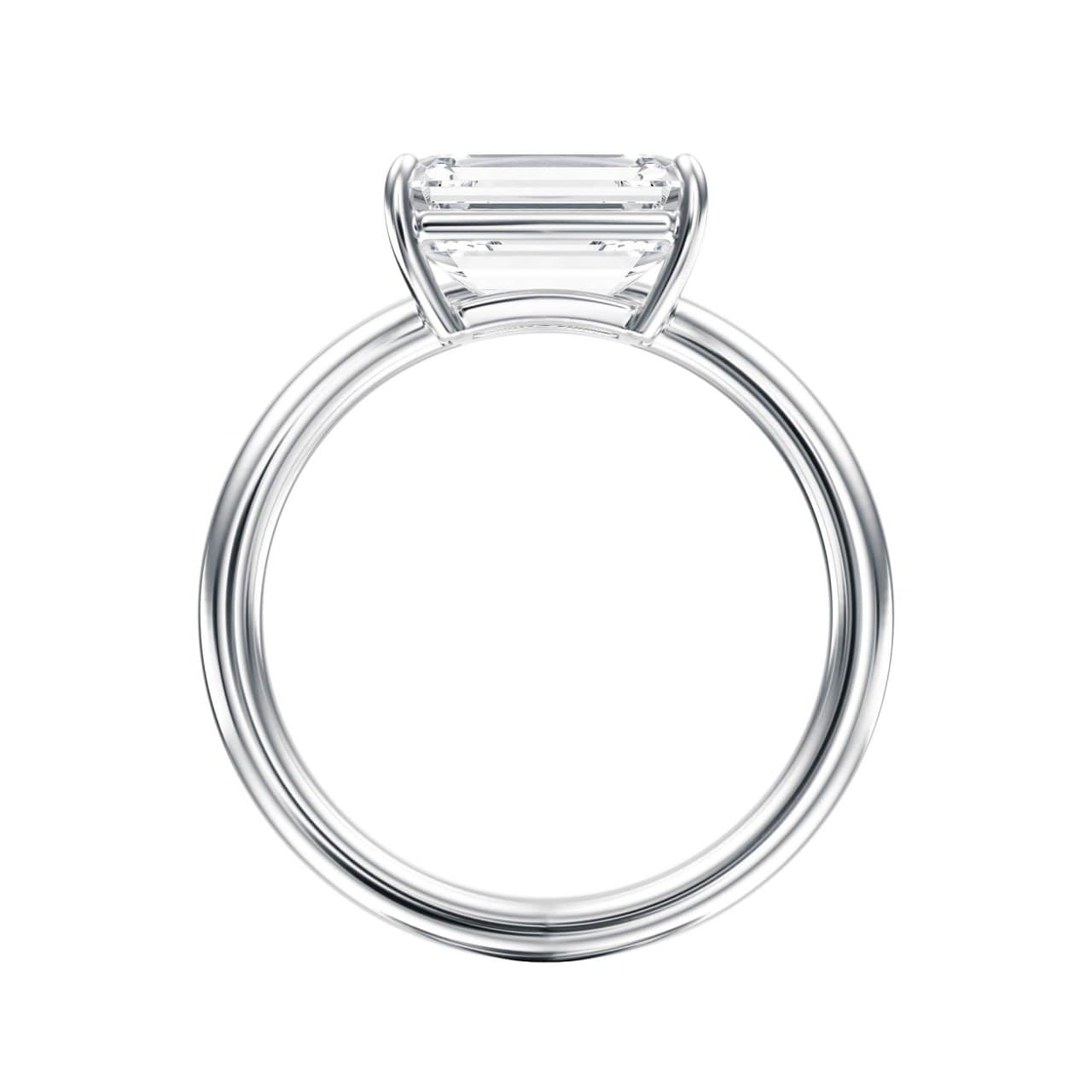
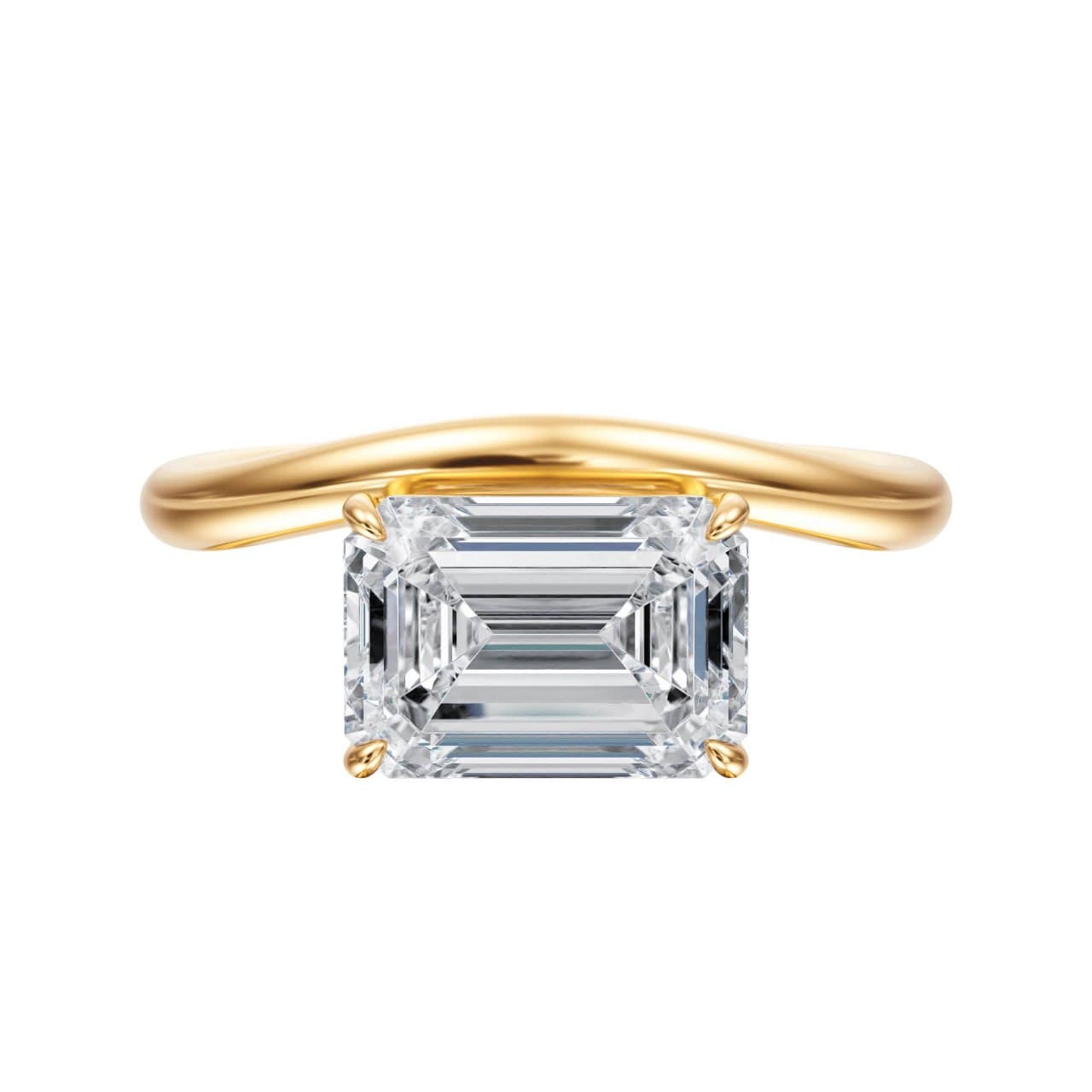
This is where 360° motion does the heavy lifting. A slowly rotating turntable shows the stone catch light from every angle, the profile of the setting, and the true color of the metal — the exact things a still image can't fully convey. Here's the same ring spinning in rose, white and yellow gold:
Minimal is not easy: the design decisions that make it work
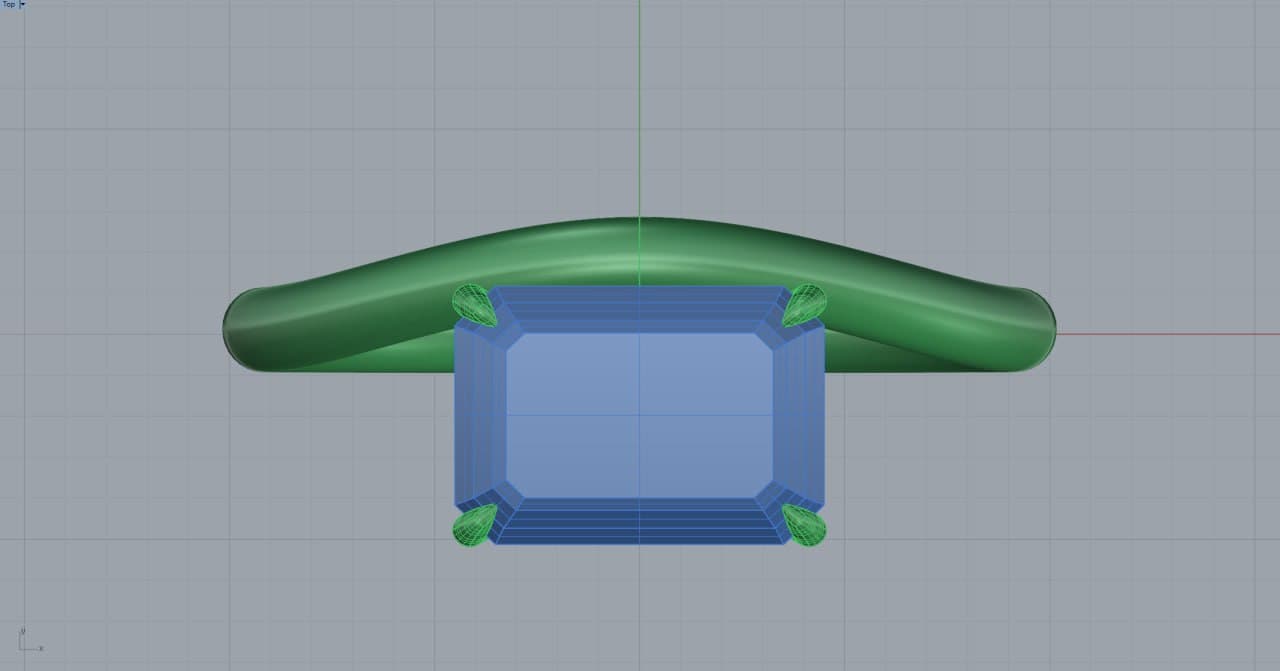
It's tempting to think a plain solitaire is a beginner's project. The opposite is true. When there's no ornament to carry the design, every proportion is exposed and every millimeter matters — a band a touch too thick, a prong a shade too heavy, or an east-west stone sitting a degree off level, and the whole ring looks wrong. Minimalism demands more precision, not less.
That's why these rings are built as exact 3D CAD models before anything is cast. The band taper, the claw geometry, the height the stone sits at, the way the contour of the band meets the setting — all of it is dialed in digitally, to real manufacturing tolerances, where it can be perfected before a gram of metal is committed.
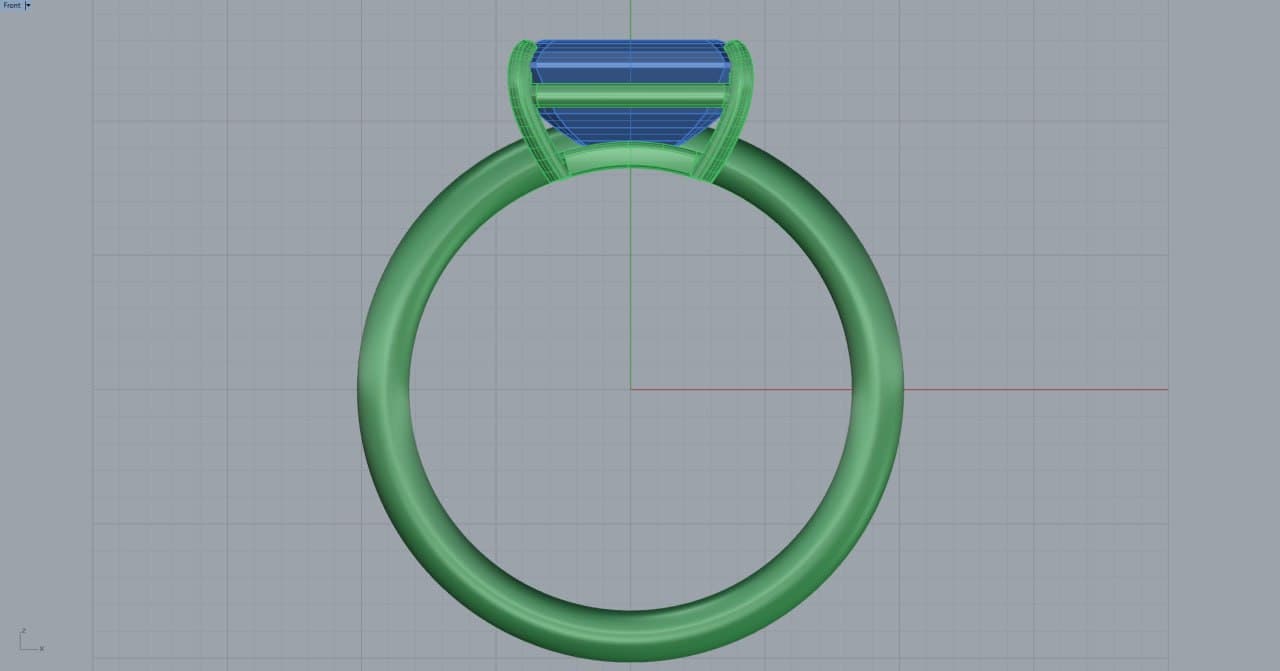
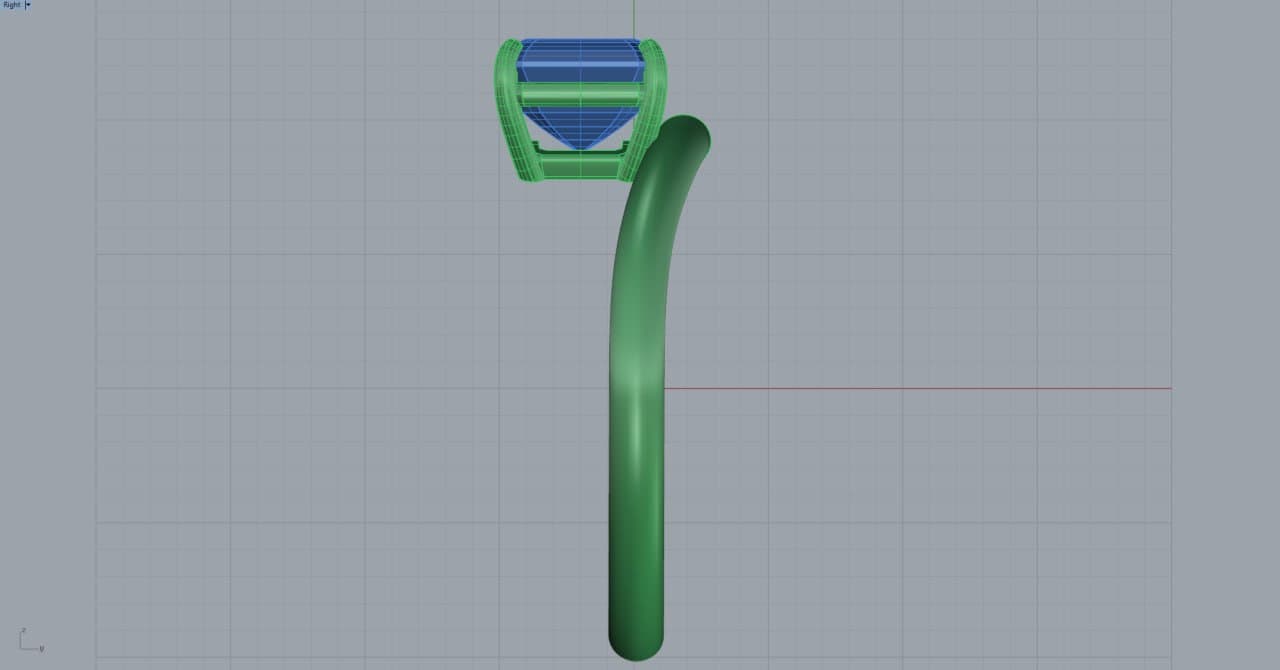
One design, three metals — a lean catalog that sells wide
Minimalism has a quiet commercial superpower for brands: a single clean design carries effortlessly across metals and stones, so one master model becomes a whole product line. The exact same ring, presented in rose, white and yellow gold, reads as three distinct products to a shopper — but it's one CAD file behind the scenes.
That's a lean, high-margin way to build a catalog: model once, then render every metal, every stone shape and every size from the same source, perfectly consistent, without a new photo shoot each time.
How brands should actually play the minimalist trend
If minimalism is both real and profitable, the move isn't to chase it blindly — it's to execute it better than everyone else. What that looks like in practice:
- Lead with the hero shapes: fancy-cut solitaires (emerald, oval, elongated cushion), east-west orientations, and slim or bezel settings — the styles buyers are actively searching for.
- Offer the choices that matter: metal (rose, white, yellow), and natural or lab-grown center stones, so the same clean design fits every budget.
- Invest where minimalism is won — presentation: photoreal renders and 360° video, because a stripped-down ring has nothing to hide behind and everything to gain from flawless imagery.
- Build a lean catalog from one master model: render every metal and shape variant from a single CAD file instead of shooting each one.
- Price for the margin the design earns: less metal and labor should mean healthier margins, not just lower prices.
The takeaway: ride it, but present it perfectly
Minimalist engagement rings aren't a fad that got lucky, and they aren't only a cost-cutting trick. They're a genuine shift in American taste that also happens to be better business — cheaper to make, faster to produce, higher-margin, and tailor-made for how rings are discovered and sold online. That rare overlap of what customers want and what's profitable to sell is exactly why the look is everywhere.
The brands that win it won't be the ones offering the plainest ring — they'll be the ones presenting a beautifully proportioned, precisely built minimalist design with imagery so good the restraint reads as luxury. If you want your minimalist line modeled, rendered and animated to that standard, that's what we do. Tell us about your piece and get a quote.
Key takeaways
- Minimalist engagement rings — clean solitaires, elongated fancy cuts, east-west settings and slim bands — now define the US market.
- It's both a real trend and easier to sell: quiet-luxury taste plus lab-grown diamonds moved the budget into the stone and away from ornate settings.
- Minimal designs use less metal and labor, produce faster and carry higher margins — genuinely better business, not just fashion.
- With nothing to hide behind, minimalist rings live or die on presentation — photoreal renders and 360-degree video do the selling.
- Minimal is hard to design well: every proportion is exposed, so precise 3D CAD matters more, not less.
- One clean CAD model becomes a whole line across metals and stones — a lean, high-margin catalog.
Frequently asked questions
Are minimalist engagement rings actually a trend or just a fad?
They're a genuine, durable shift in the US market — driven by quiet-luxury taste, the rise of lab-grown diamonds that let buyers spend more on the stone, and social-media discovery. Because minimalist designs are also cheaper and faster to make and higher-margin to sell, the trend has strong staying power on both the demand and supply sides.
Why are minimalist rings easier and more profitable to sell?
A slim solitaire uses far less metal than a heavy paved setting, has few or no accent stones to set, and produces faster with fewer defects — lowering cost and labor. Combined with strong demand and photogenic imagery that converts online, that means healthier margins and faster turnaround.
What is an east-west engagement ring?
An east-west ring sets an elongated stone — like an emerald, oval or radiant cut — horizontally across the finger instead of the traditional vertical orientation. It's a signature minimalist micro-trend that instantly makes a solitaire feel modern and considered.
Which diamond shapes are trending in the US right now?
Elongated fancy shapes are leading: emerald, oval, elongated cushion and radiant cuts, which look larger and more distinctive than the traditional round brilliant and pair naturally with clean, minimalist settings.
How should a jewelry brand present minimalist rings?
With flawless imagery. Because a minimalist ring has no ornament to hide behind, photoreal 3D renders and 360-degree turntable video are essential — they show the stone's light, the setting's profile and the true metal color, which is what actually closes the sale online.
Further reading
Have a piece you need in 3D?
Fixed pricing, real-time tracking, manufacturing-ready files — delivered worldwide.
Request a quote