
Ask a jeweler how much gold is in an engagement ring and you'll usually get a shrug and an "it depends." But it doesn't have to be a mystery. When a ring is designed in 3D CAD, the software can weigh it — in any metal, to a hundredth of a gram — before a single grain of gold is melted. So we did exactly that. We took one real, in-production design — the Cathedral Halo Oval Pavé engagement ring by our client 18karats — and weighed it in 11 different metals, from sterling silver to platinum. Same stones, same setting, same size. Only the metal changes. Here's the hidden number behind your ring, and why it matters more than you'd think.
Meet the ring we put on the scale
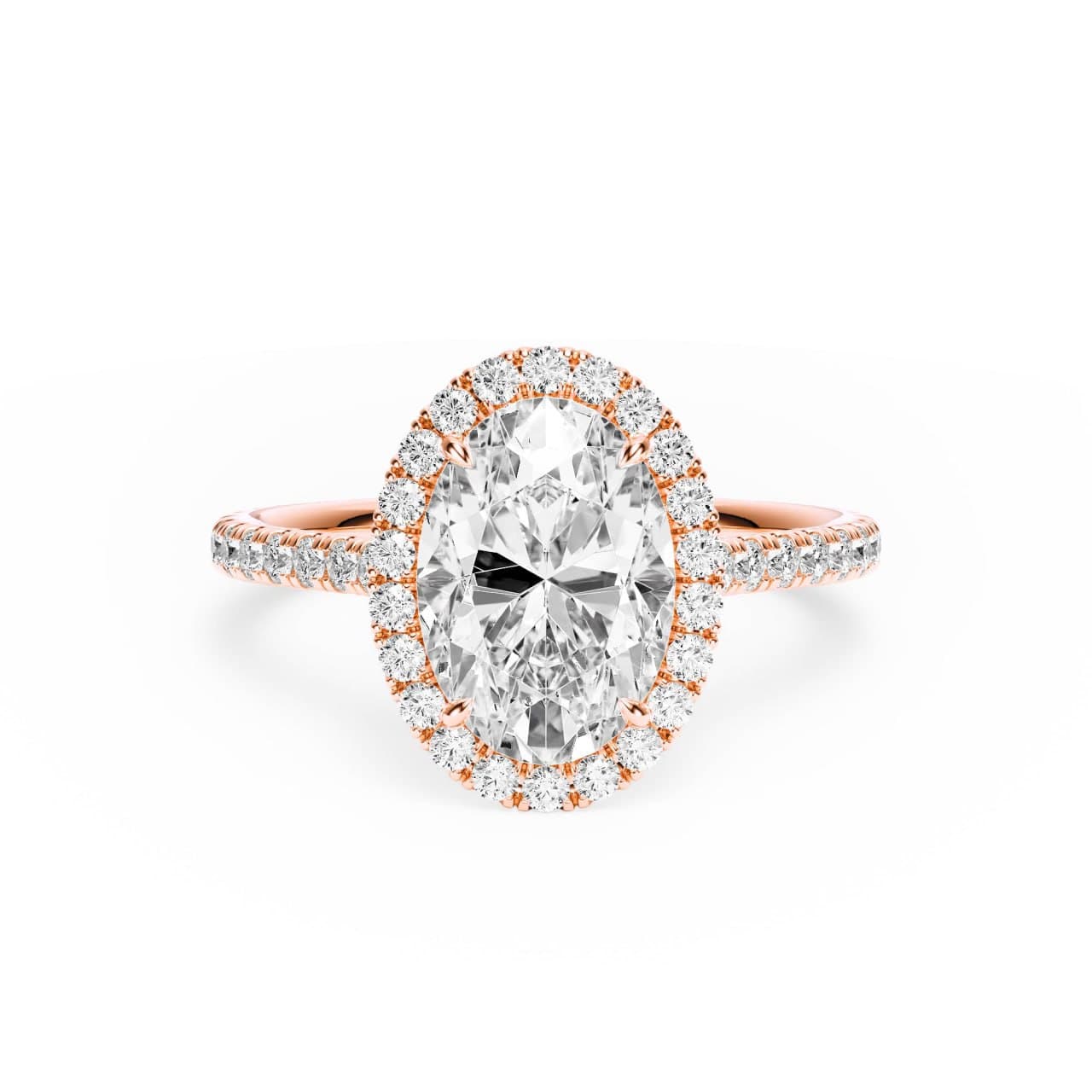
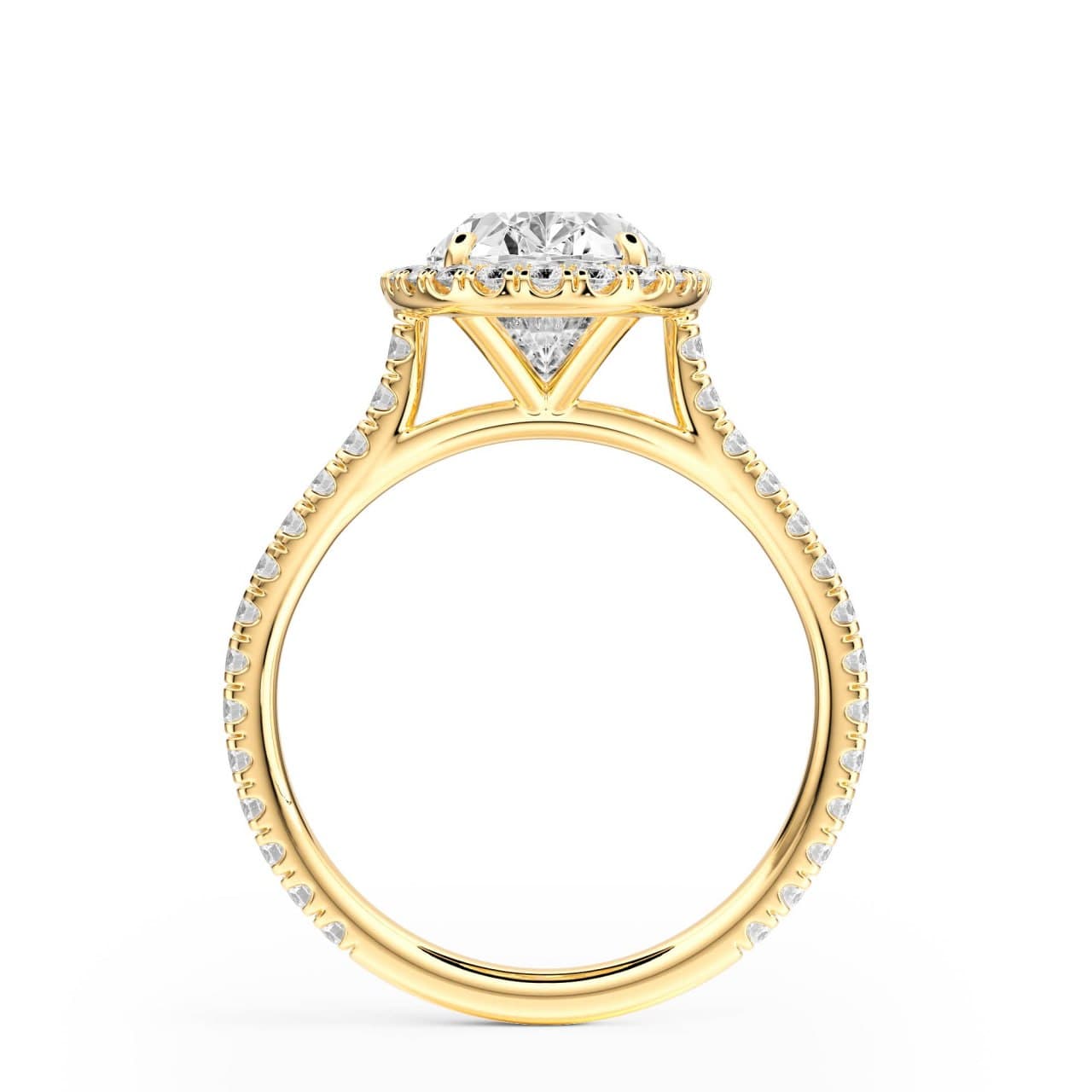
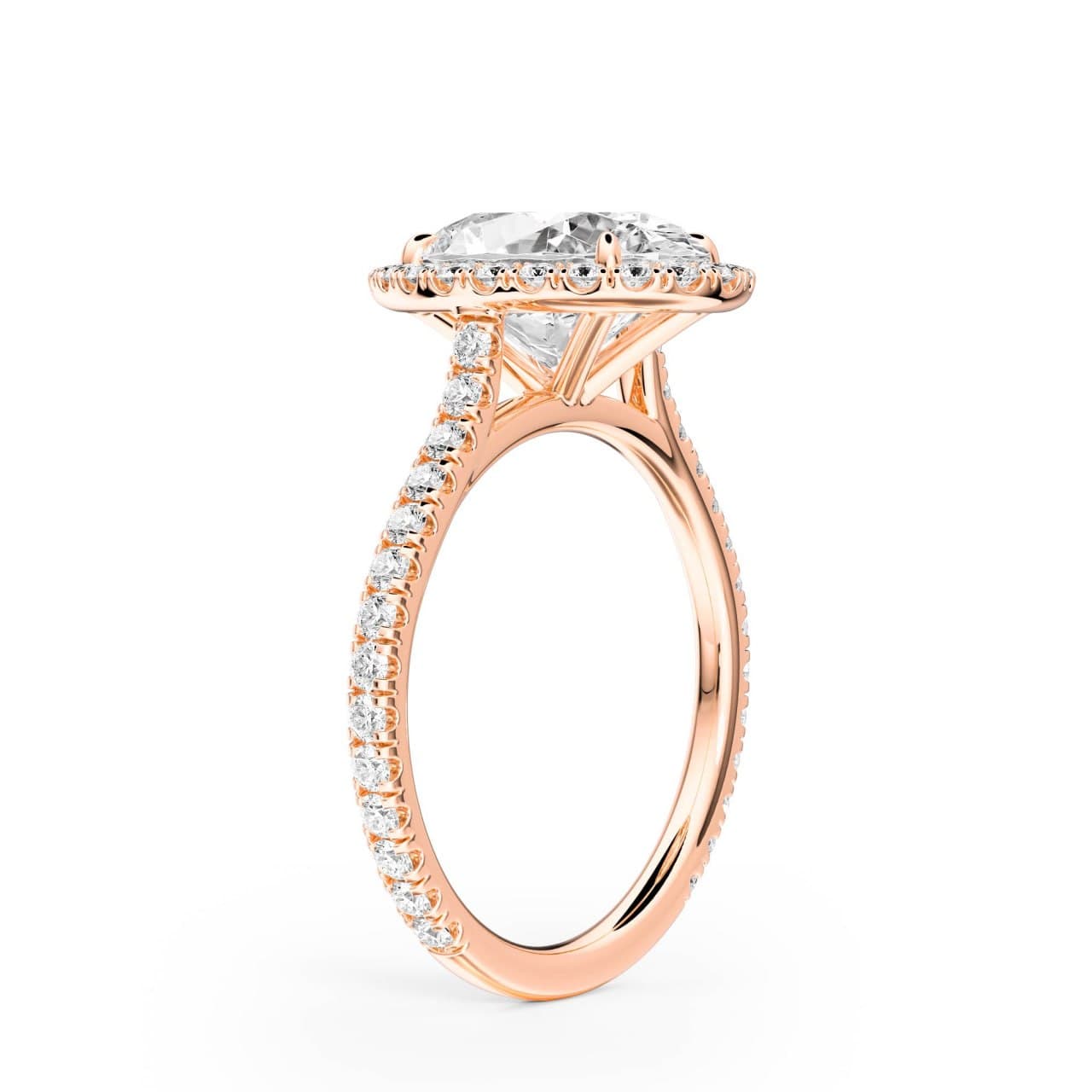
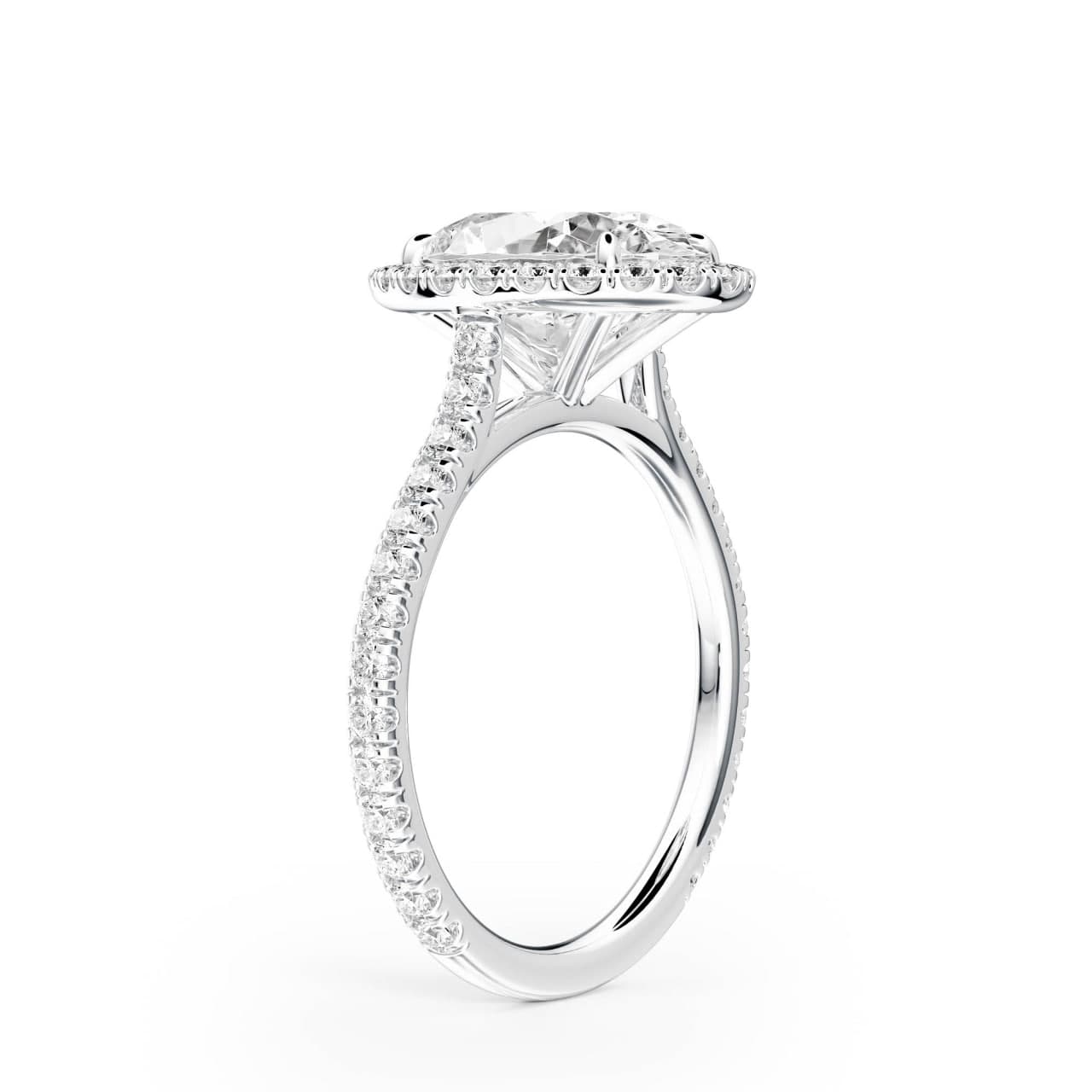
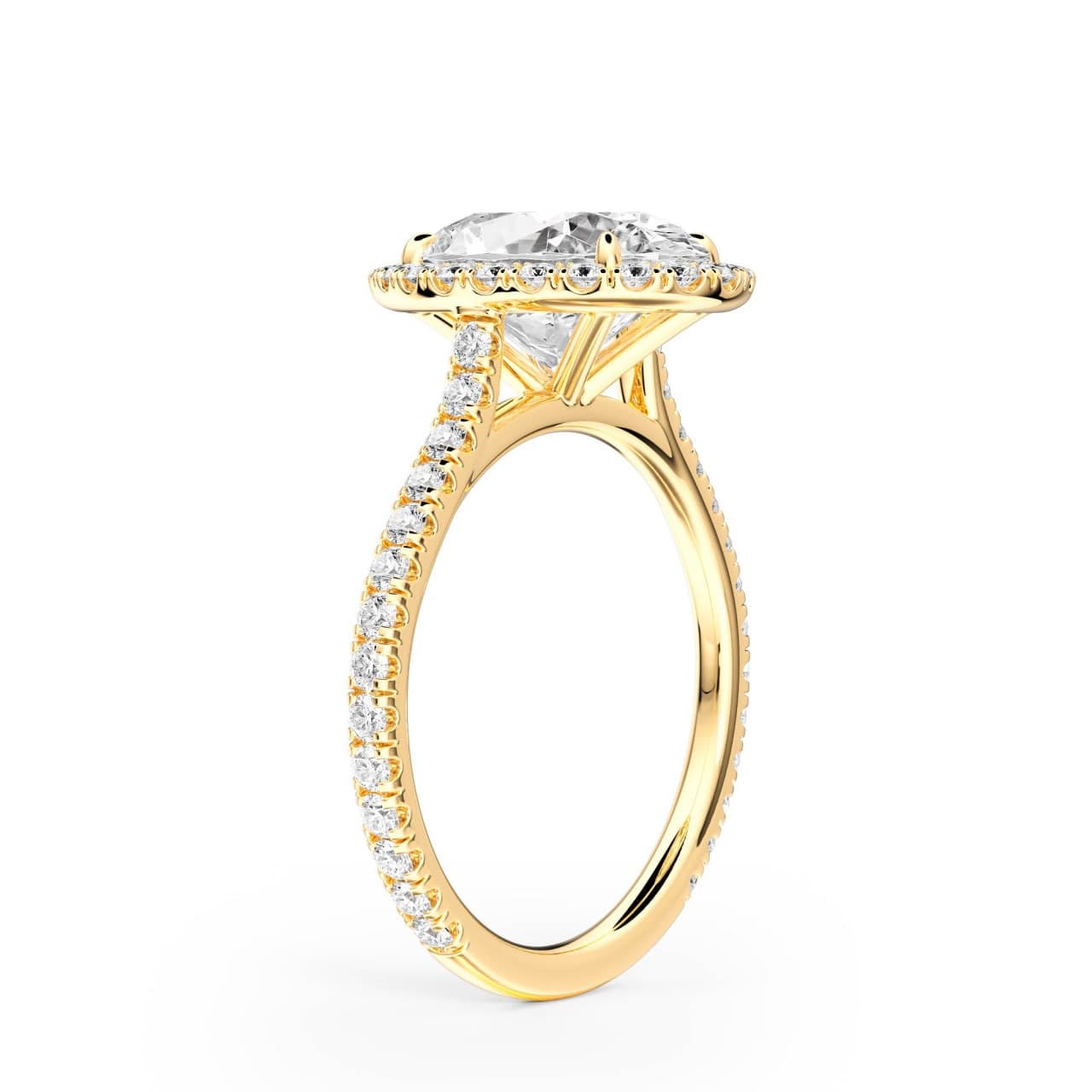
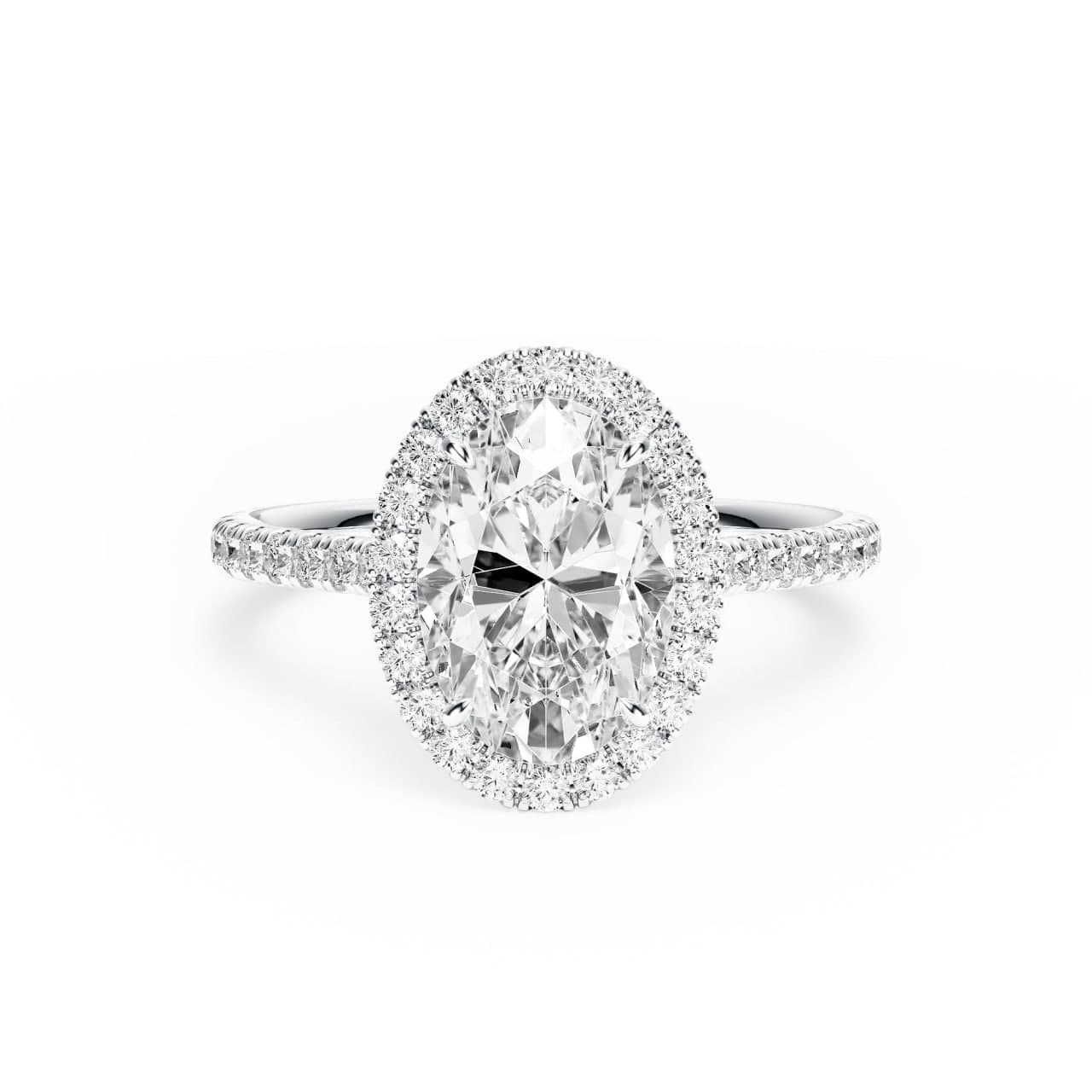
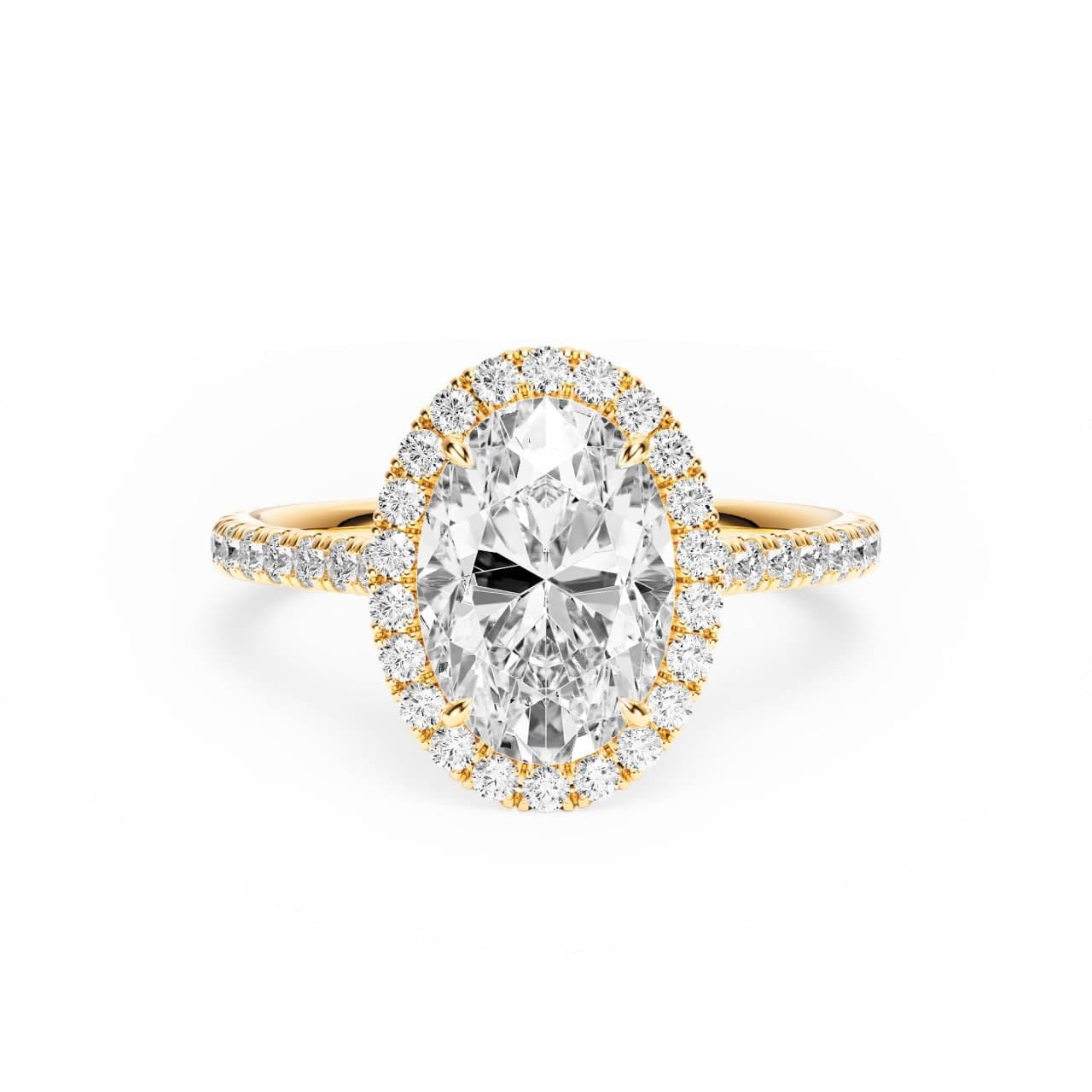
Our test subject is a real, buyable design: the Cathedral Halo Oval Pavé Diamond Engagement Ring by 18karats. It's a classic modern silhouette — a roughly 7x10 mm oval center (about a 2-carat look), wrapped in a diamond halo, lifted on a cathedral shoulder, with a delicate pavé-set band. In other words, exactly the kind of ring millions of Americans shop for every year.
We built the manufacturing CAD and the photoreal renders for this piece — which is the whole point: because it exists as a precise digital model, it can be measured, weighed and rendered in any metal before it's produced.
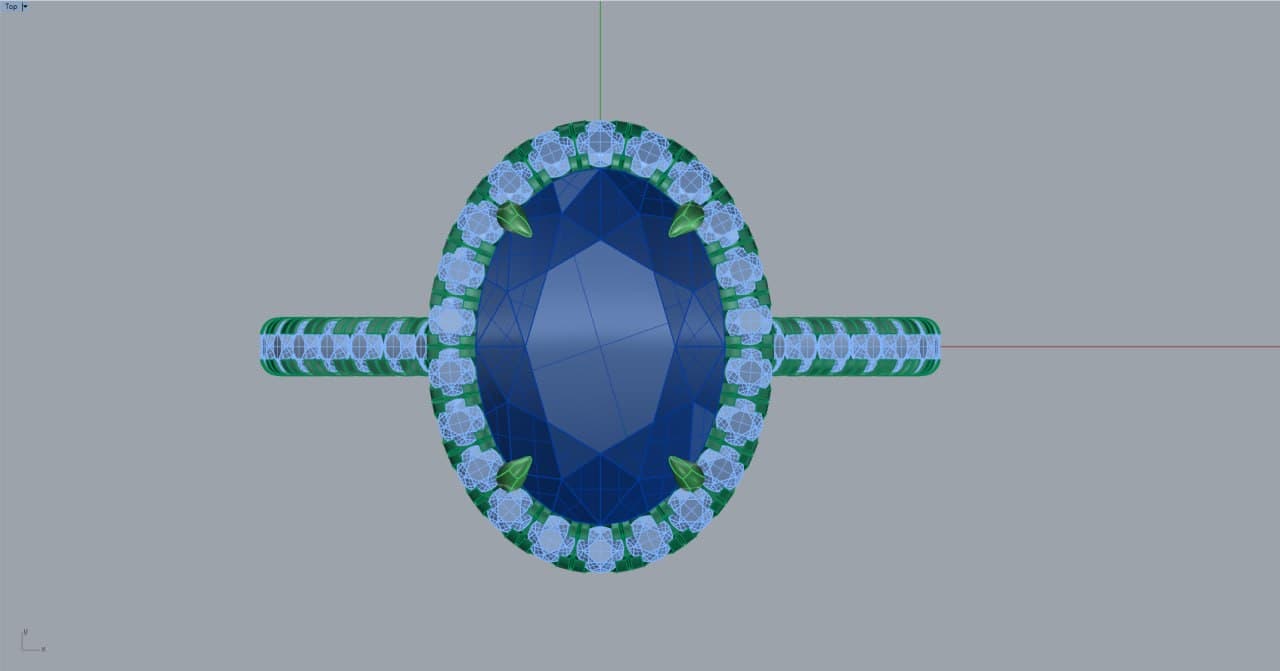
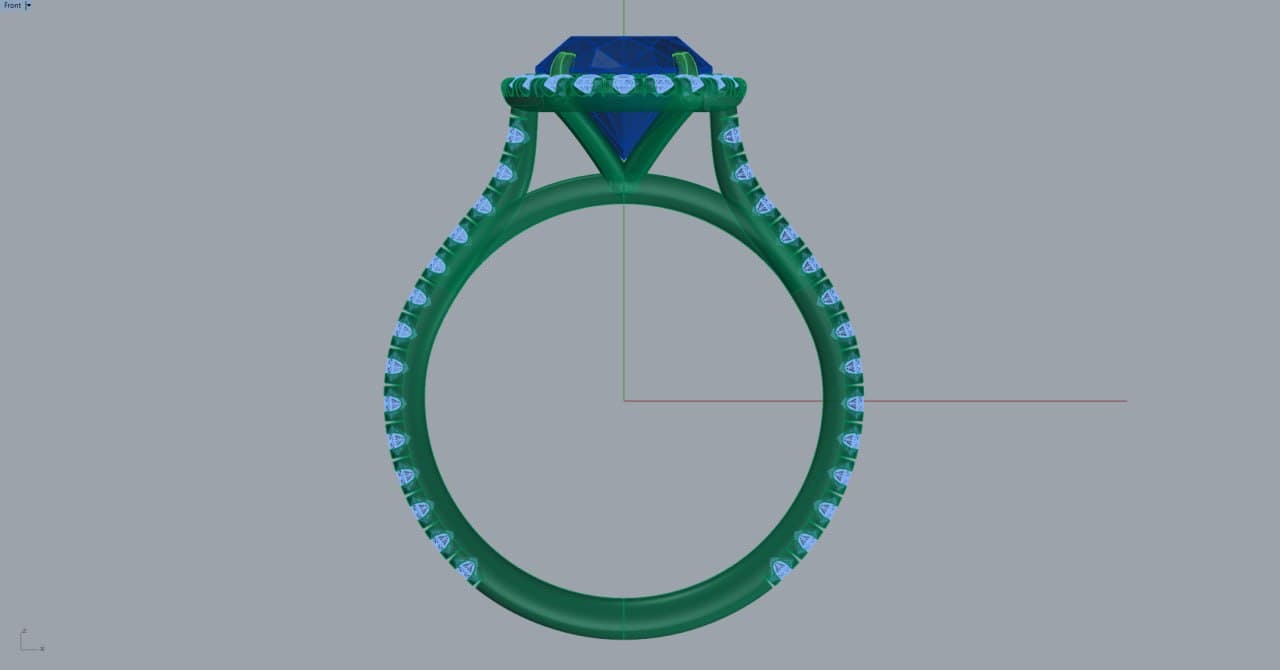
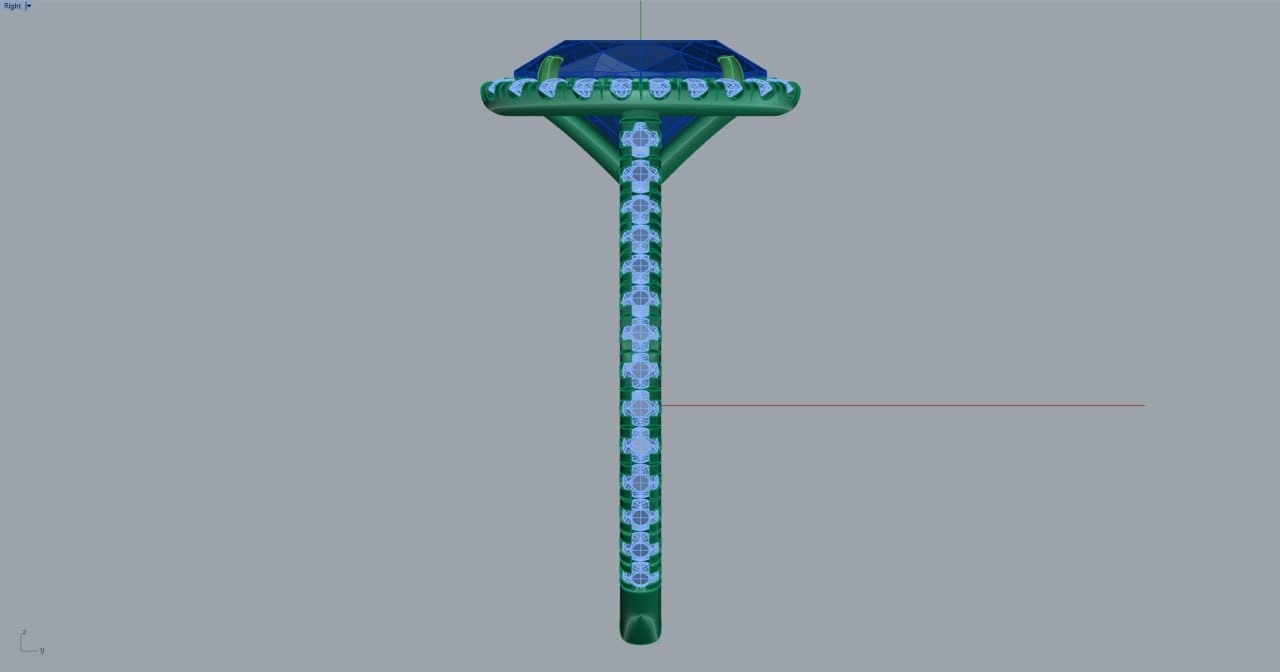
The digital twin: why the weight is knowable before casting
Here's the part most buyers never see. Before this ring was ever cast, it existed as an exact 3D CAD model — a digital twin built to real manufacturing tolerances. Every prong, every pavé seat, the halo, the cathedral, the band: all of it modeled to precise millimeter dimensions.
Because the geometry is exact, the software knows the ring's volume down to the cubic millimeter. Multiply that volume by the density of a chosen metal and you get its weight — instantly, for any metal, with zero guesswork and nothing wasted. That's how a studio can tell you what your ring will weigh, and roughly what the metal will cost, before committing a gram to the mold.
The reveal: the same ring in 11 metals
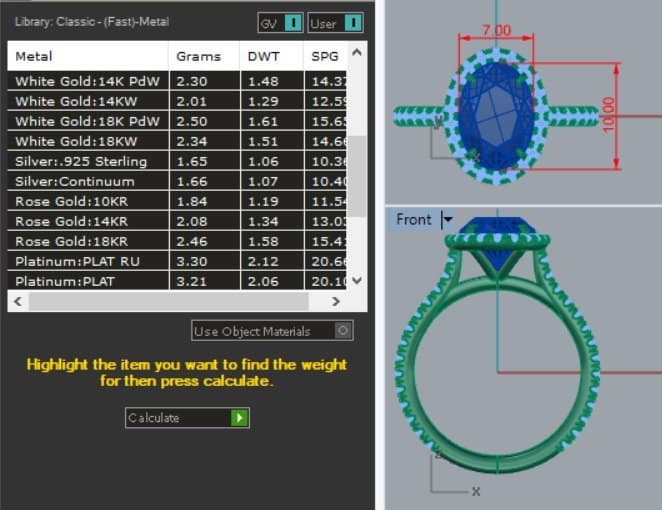
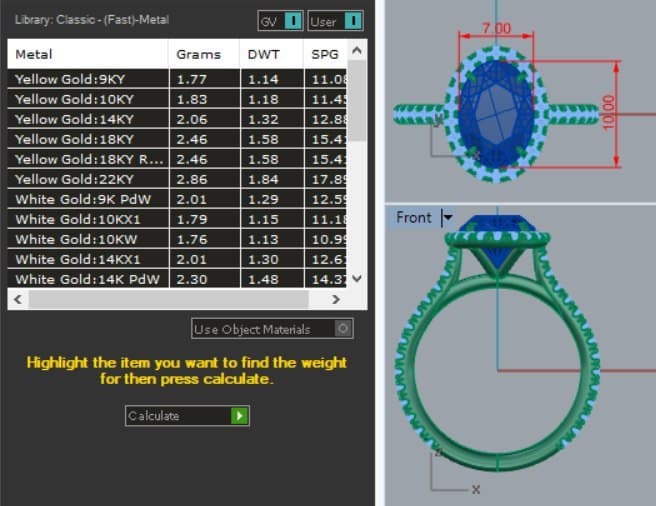
This is the number nobody puts on a product page. Using the CAD model's exact volume, we ran the metal-weight calculation for the same ring across every common option. Same design, same 7x10 mm oval, same band — only the metal changes. Weights are shown in grams and in pennyweight (dwt), the unit US jewelers actually price by.
| Metal | Weight (grams) | Weight (dwt) |
|---|---|---|
| Sterling silver (925) | 1.65 g | 1.06 dwt |
| 9K yellow gold | 1.77 g | 1.14 dwt |
| 10K yellow gold | 1.83 g | 1.18 dwt |
| 14K white gold | 2.01 g | 1.29 dwt |
| 14K yellow gold | 2.06 g | 1.32 dwt |
| 14K rose gold | 2.08 g | 1.34 dwt |
| 18K white gold | 2.34 g | 1.51 dwt |
| 18K yellow gold | 2.46 g | 1.58 dwt |
| 18K rose gold | 2.46 g | 1.58 dwt |
| 22K yellow gold | 2.86 g | 1.84 dwt |
| Platinum | 3.21 g | 2.06 dwt |
The surprise: platinum is basically two rings of silver
Look at the spread. The exact same ring weighs 1.65 g in sterling silver and 3.21 g in platinum — nearly double. And platinum is roughly 55 to 60% heavier than the popular 14K golds, even though they look identical on the hand.
That's not a modeling quirk; it's physics. Platinum is one of the densest metals used in jewelry, so it packs far more mass into the same shape. This is why a platinum ring feels noticeably substantial the moment you pick it up — that heft is a big part of why platinum reads as "the luxury metal," and part of why it costs more (you're buying more grams of a pricier metal). Higher-karat golds behave the same way in miniature: 22K yellow gold (2.86 g) is heavier than 14K (2.06 g), because it's more pure gold and less light alloy.
What 14K, 18K and 22K actually mean
Those karat numbers aren't just a price tier — they're a purity recipe, and they explain the weights above.
- Karat is parts out of 24. 24K is pure gold; 18K is 18/24 = 75% gold; 14K is 14/24, about 58.5% gold; 10K is about 41.7%.
- Higher karat means more gold and less alloy. That means richer color and more weight — but softer metal, so very high karats (22K) dent more easily in daily-wear rings.
- Lower karat means more alloy. 14K is harder and more scratch-resistant, which is why it's the workhorse of American engagement rings.
- The alloy sets the color. The same gold becomes yellow, white or rose depending on what it's mixed with (copper for rose, palladium or nickel for white) — which is how one design gives you three totally different looks.
Same design, your metal — see it before it exists
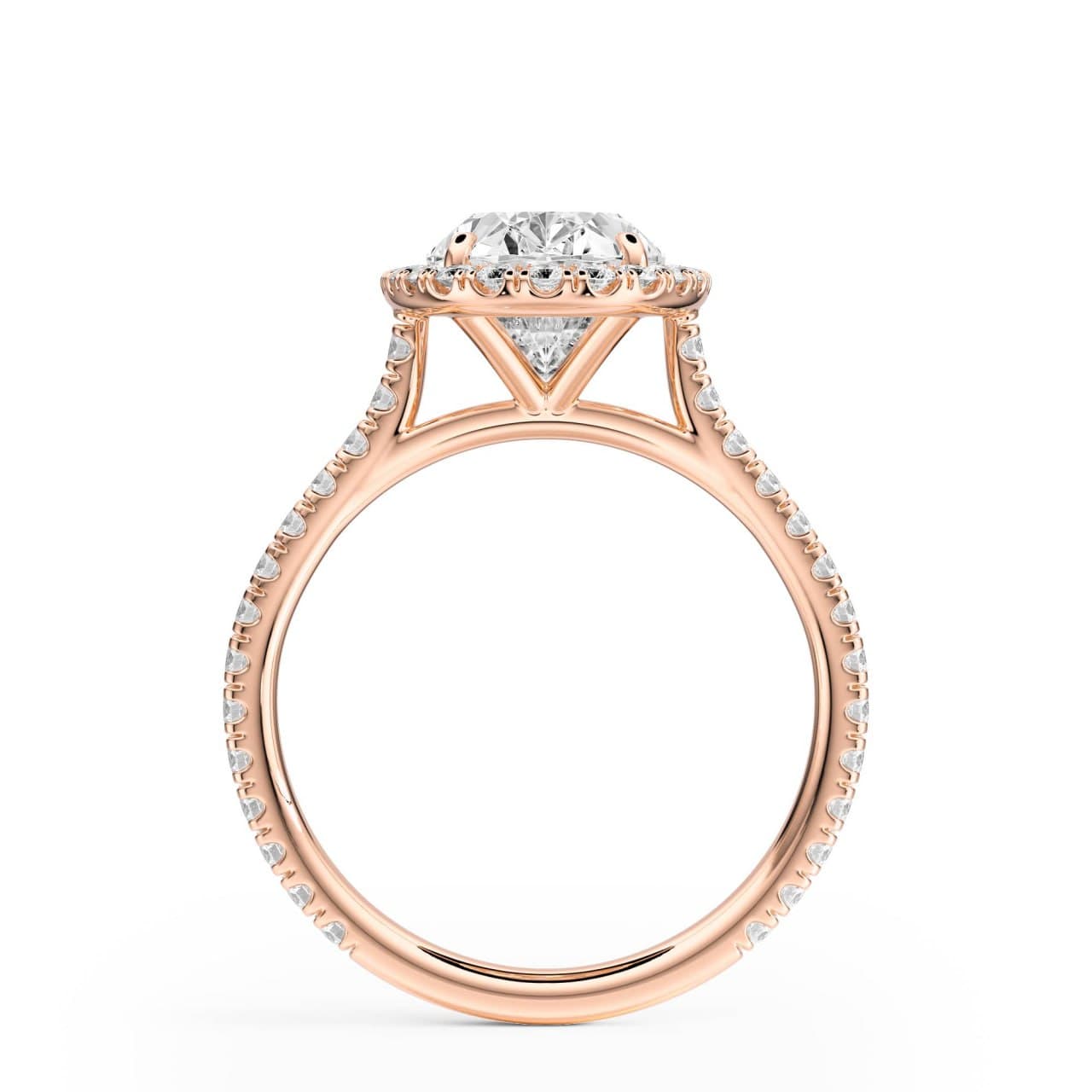
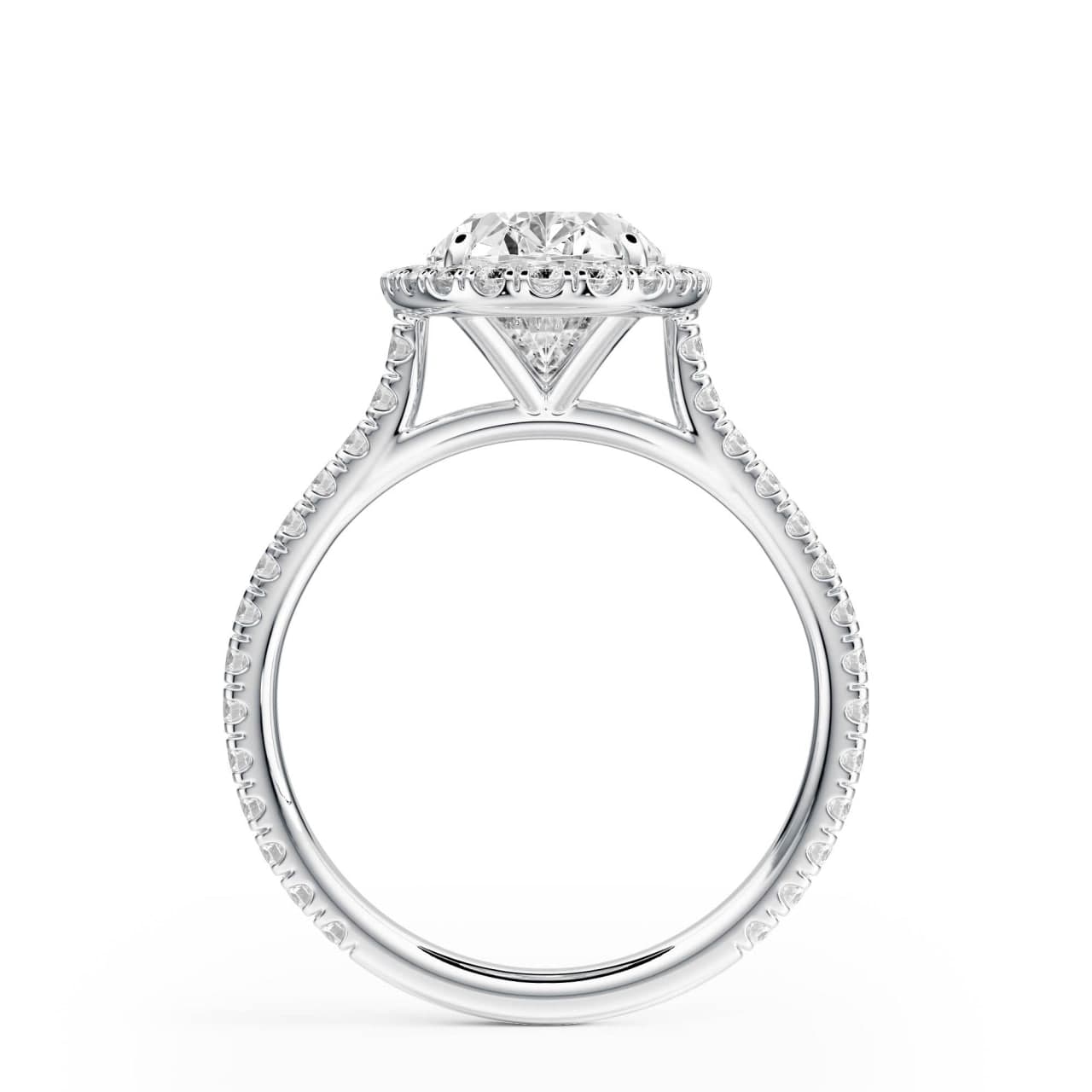
Because it all comes from one CAD model, the ring can be photographed — photorealistically — in any metal before you commit. Here's the exact same design rendered in rose, white and yellow gold: same stones, same setting, three completely different moods. This is the other superpower of a digital twin: you choose the metal looking at the finished ring, not a swatch.
Why this matters when you're buying (or selling) a ring
Weight isn't trivia — it quietly shapes the whole decision.
- Feel: heavier metals (platinum, high-karat gold) read as substantial and premium; lighter ones sit airier on the finger.
- Durability: 14K and platinum resist daily wear better than very high-karat gold; the weight table hints at the material trade-offs.
- Cost: the mounting's metal price scales with grams, karat and the day's metal market — so the same design genuinely costs different amounts in different metals, before the diamond is even added.
- Resale and honesty: knowing the gram weight and karat means you know roughly how much actual precious metal you're paying for.
- For brands: publishing exact specs (metal weight, dimensions) builds trust and wins the detail-obsessed shopper — and it's free once the ring lives in CAD.
The takeaway: your ring is a knowable object, not a guess
The romance of an engagement ring is priceless — but the ring itself is a precisely knowable object. Designed in CAD, it can be measured, weighed and previewed in any metal before it's made, so nothing about it has to be a surprise: not the look, not the fit, not the grams of gold.
See the finished ring for yourself on our client's site — the Cathedral Halo Oval Pavé engagement ring at 18karats — and if you're a jeweler or brand who wants your own designs modeled, weighed and rendered like this, that's exactly what we do. Tell us about your piece and get a quote.
Key takeaways
- Because an engagement ring is designed in 3D CAD, its exact metal weight is known — to a hundredth of a gram — before it's ever cast.
- The same halo ring weighs 1.65 g in sterling silver and 3.21 g in platinum — platinum is nearly double and about 55 to 60% heavier than 14K gold.
- Karat is purity: 14K is about 58.5% gold (harder, everyday), 18K is 75% (richer), 22K is 91.6% (heavier, softer).
- One CAD model previews the ring photorealistically in rose, white or yellow gold — so you choose the metal looking at the finished ring.
- Metal weight drives feel, durability and the metal-cost portion of the price — knowing it makes for a smarter purchase.
Frequently asked questions
How much gold is in an engagement ring?
It depends on the design and the karat, but a typical halo engagement ring like this one holds roughly 1.8 to 2.9 grams of gold — about 1.77 g in 9K up to 2.86 g in 22K for this exact ring. The weight is calculated from the ring's 3D CAD model, so it's known precisely before casting.
How much does an engagement ring weigh in grams?
For this cathedral halo oval design, the metal alone ranges from 1.65 g in sterling silver to 3.21 g in platinum, with common 14K to 18K golds landing around 2.0 to 2.5 g. Larger stones, wider bands and more metal-heavy settings weigh more.
Does platinum weigh more than gold?
Yes — significantly. Platinum is one of the densest jewelry metals, so the identical ring that weighs about 2.0 g in 14K gold weighs around 3.2 g in platinum. That extra heft is a big part of why platinum feels and prices like a luxury metal.
What's the difference between 14K, 18K and 22K gold?
Karat measures purity out of 24. 14K is about 58.5% gold (harder and more durable for daily wear), 18K is 75% (richer color, a bit softer), and 22K is 91.6% (heaviest and most pure, but soft). Higher karat means more gold, more weight and a warmer color.
How is a ring's weight known before it's made?
The ring is built as an exact 3D CAD model, so the software knows its precise volume. Multiplying that volume by a metal's density gives the weight in any metal — instantly and accurately — before a single gram is cast.
Further reading
Have a piece you need in 3D?
Fixed pricing, real-time tracking, manufacturing-ready files — delivered worldwide.
Request a quote