
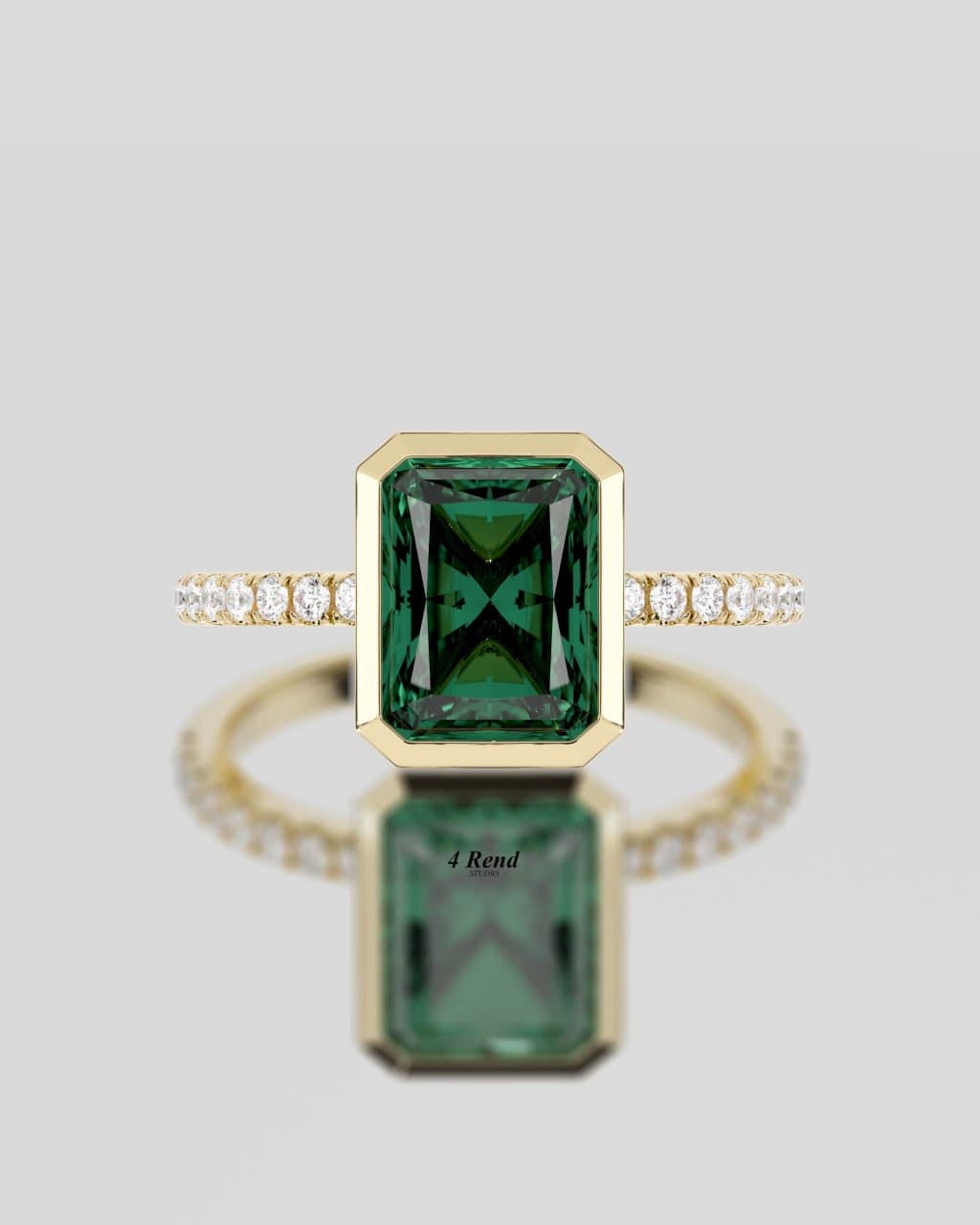
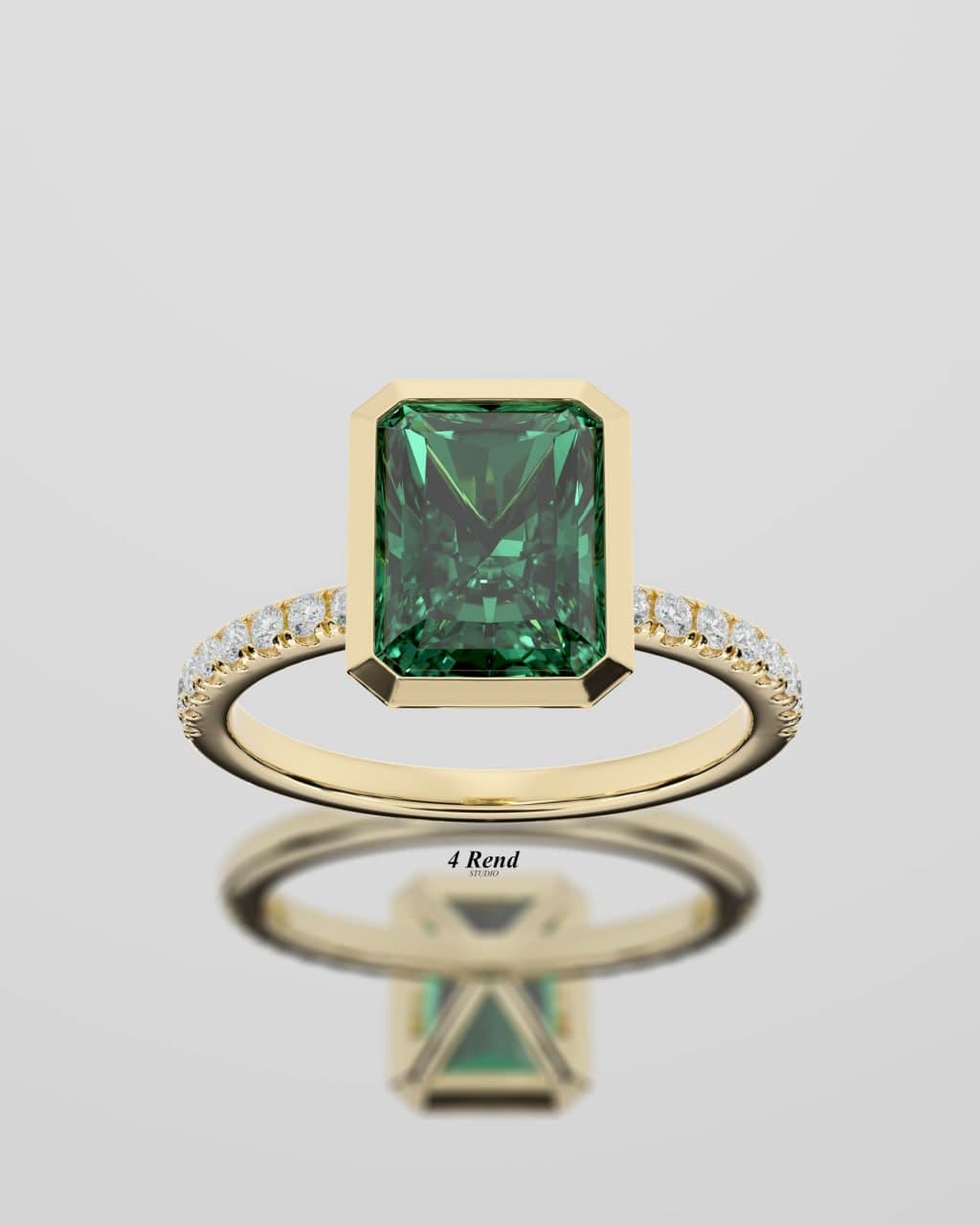
For a century the engagement ring meant one thing: a colorless diamond. That's changing. Couples are reaching for color — and green, in particular, is having a moment. The ring on this page is the look in a single frame: a deep-green emerald-cut stone set in a clean bezel, on a slim yellow-gold band lit with pavé. It reads modern, personal and quietly expensive — everything a familiar diamond solitaire sometimes isn't. Colored-stone engagement rings are one of the fastest-growing corners of the market, and for jewelers they're both an opportunity and a challenge: they sell on emotion and individuality, but they live or die on how faithfully you can show their color. Here's why green is winning, and what it takes to present a colored-stone ring so well it sells before it's ever cast.
The ring that captures the trend
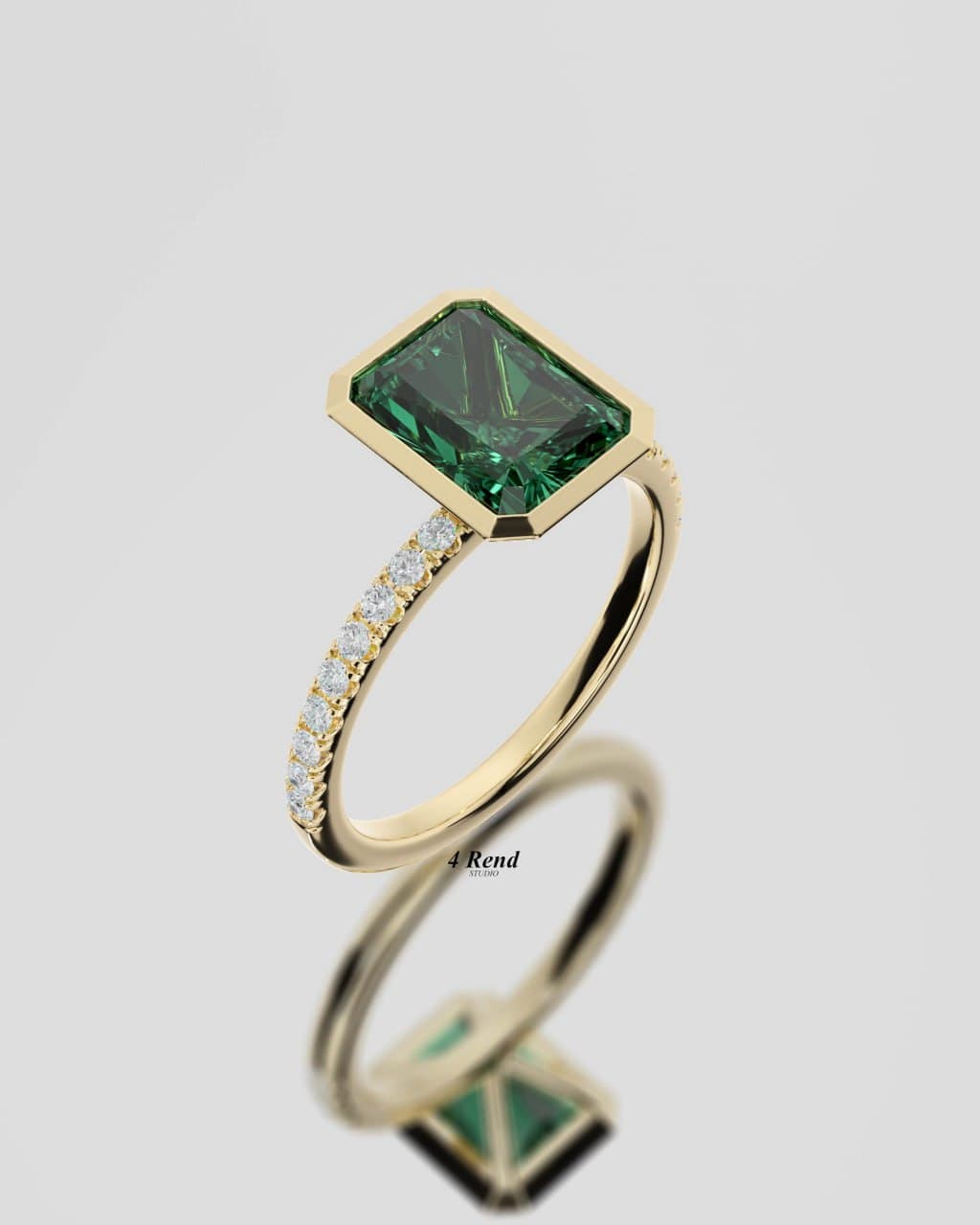
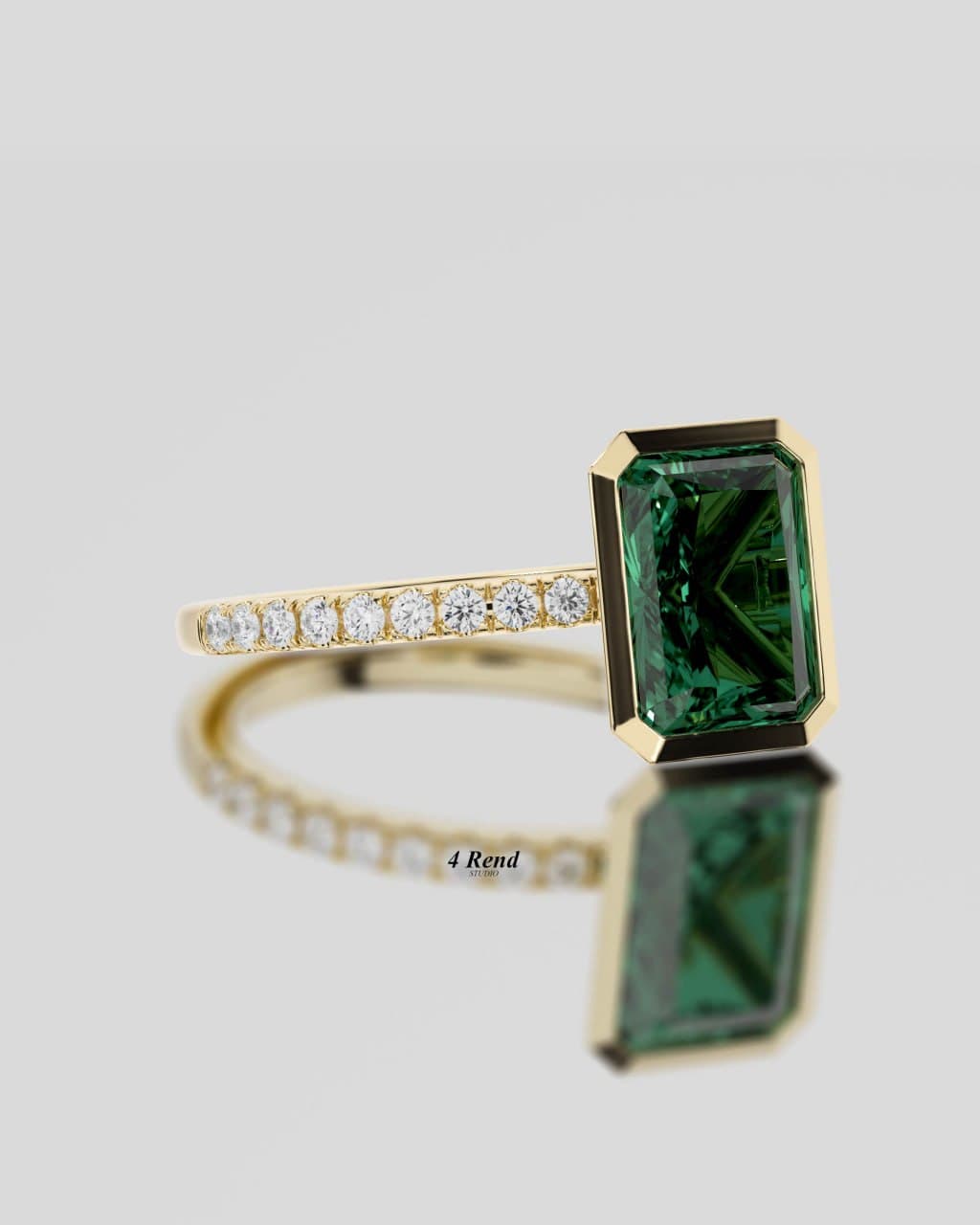
This is the colored-stone look distilled: a single emerald-cut green gemstone, framed by a smooth yellow-gold bezel, on a slim band set with French pavé diamonds. Nothing competes with the stone — the bezel gives it a clean, architectural frame, and the warm gold makes the green read richer and deeper. It's a ring that feels contemporary and personal rather than traditional.
That's exactly why it works right now. A colored center stone signals individuality; the emerald cut looks large and elegant for its weight; the bezel is modern and protective; and the pavé band adds just enough sparkle to keep it feeling like fine jewelry. Every choice pushes the same way — distinctive, wearable, and unmistakably intentional.
Why couples are choosing color
Colored-stone engagement rings aren't a novelty anymore — they're a genuine shift, and several forces are pushing the same direction at once.
- Individuality over convention: couples want a ring that looks like theirs, not the one everyone else has. A colored center stone is the fastest way to make a ring unmistakably personal.
- Diamonds became ubiquitous: as lab-grown made large white diamonds affordable and everywhere, a distinctive colored stone became the way to stand out rather than blend in.
- Quiet-luxury taste: the mood turned toward understated, expensive-looking restraint — a deep, saturated stone in a clean setting reads as considered and rich, not flashy.
- Social discovery: rings are found on TikTok, Instagram and Pinterest before a store visit, and a bold color is exactly the kind of graphic, scroll-stopping image that performs there.
- Meaning: green carries a story — renewal, nature, growth (and emerald is May's birthstone) — and couples increasingly want a ring that means something, not just sparkles.
Green, specifically: emerald, sapphire or tourmaline
“Green stone” covers several gems, and the choice changes the ring's color, durability and price. The three that dominate the look:
- Emerald — the classic, romantic green; the emerald cut was literally named for it. Rich and storied, but softer and more included, so it wants a protective setting.
- Green sapphire — a corundum, extremely hard and durable (ideal for daily wear), in tones from mint to deep forest, often at friendlier prices than fine emerald.
- Green tourmaline (and lab-grown options) — bright, saturated greens with excellent clarity and value, popular for a clean, vivid look.
The setting that makes it modern: emerald cut + bezel
Two choices turn a green stone into a current, sellable ring: the cut and the setting. The emerald cut — a rectangular step cut with cropped corners — gives long, clean flashes and an elegant, elongated shape that flatters the finger and looks larger for its weight. It's the cut of the moment across both diamonds and colored stones.
The bezel wrapping it does double duty. Aesthetically it's sleek and architectural — a smooth metal frame that reads distinctly modern next to traditional prongs. Practically, it's protective: it shields the stone's edges, which matters for softer gems like emerald, and it holds up beautifully to everyday wear. Emerald cut plus bezel in warm yellow gold is a pairing that looks designed, not defaulted.
Color is the hard part: why these rings live or die on rendering
Here's the catch with a colored-stone ring: the entire sale rests on one thing a photo often gets wrong — the color. A diamond is judged on sparkle, which is forgiving. A green stone is judged on hue, saturation and tone, and buyers are ruthless about it. If the green photographs a shade too yellow, too dark or too flat, the piece looks cheap and the trust is gone before the price is even considered.
That's why colored-stone rings are the strongest case for photoreal 3D rendering rather than a quick photograph. In a render, the stone's color is set with physically accurate materials and controlled studio lighting, so the green comes through exactly as intended — deep, alive and consistent in every image, on every screen. And because it's built from a model, you can show the same ring truthfully in yellow, white or rose gold, and swap the stone's color, without a new shoot each time.
How it's built: from CAD to photoreal
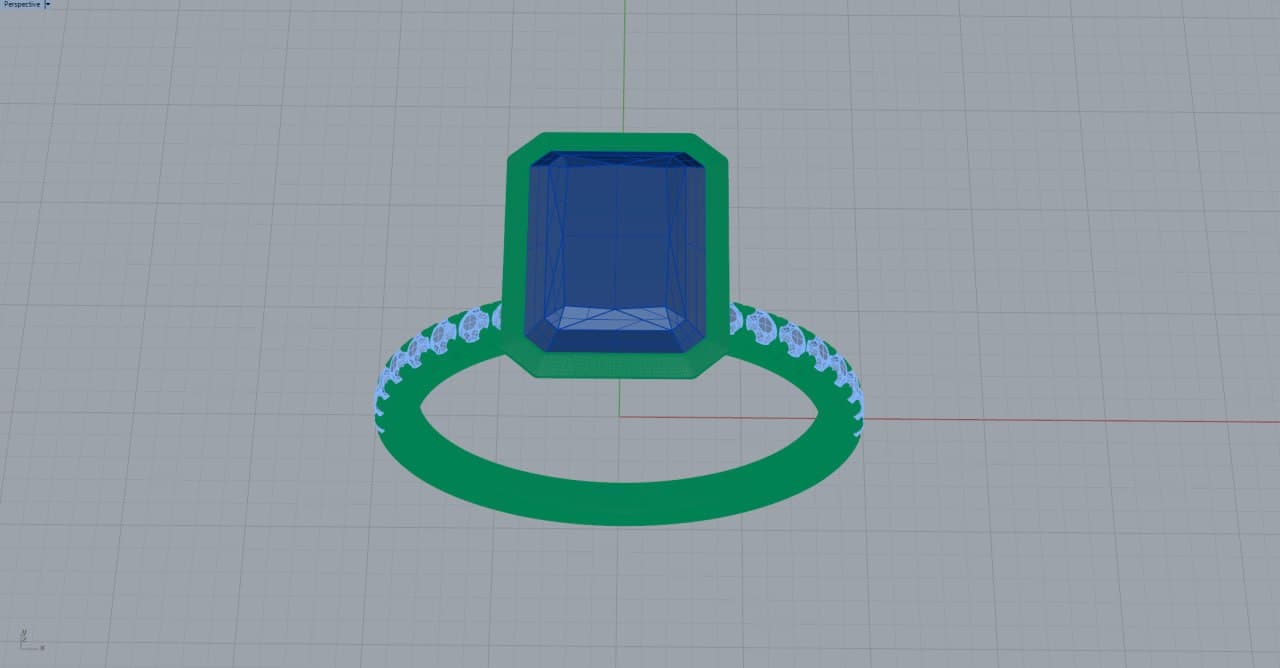
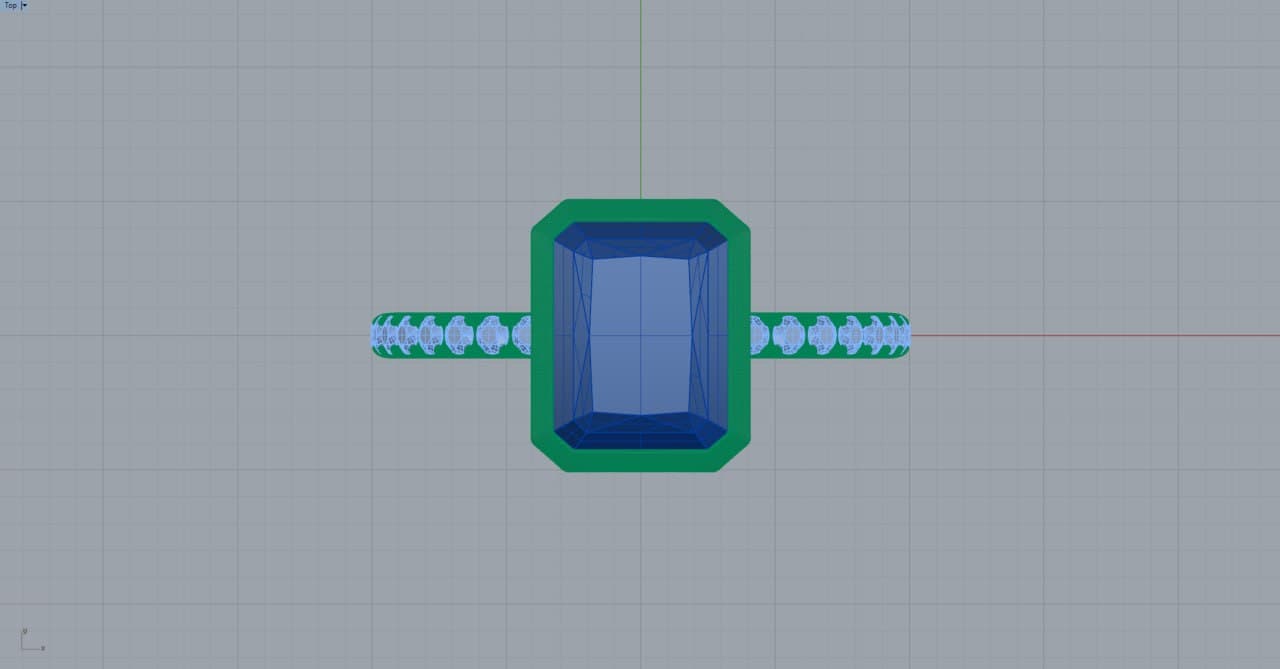
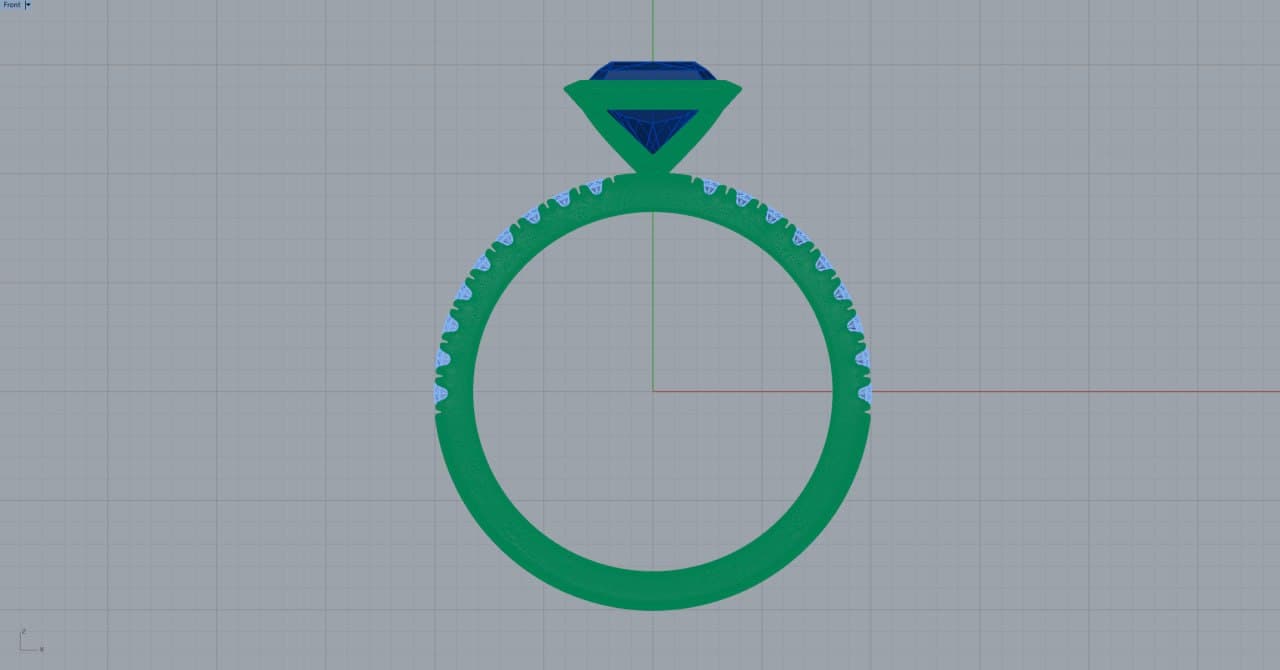
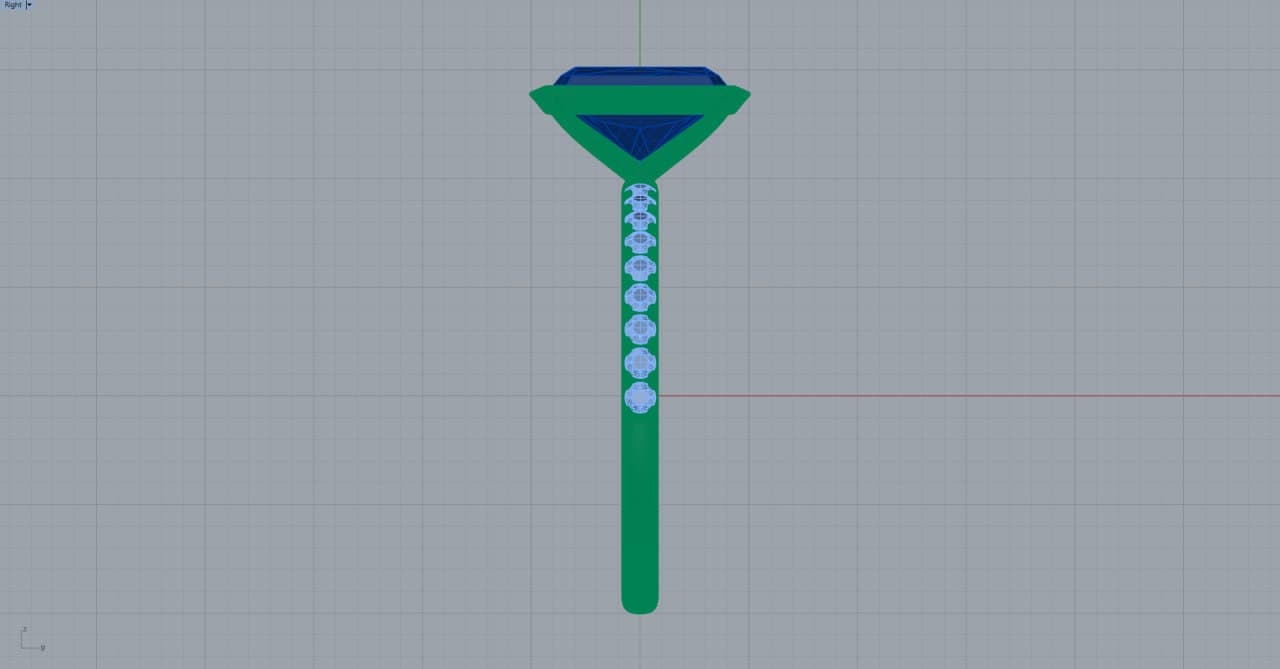
Every piece starts as a precise, production-ready CAD model — clean geometry, real stone dimensions, castable metal, correct bezel and pavé seats. It's dialed in digitally, to real manufacturing tolerances, before a gram of gold is committed. Here's this ring across the standard Rhino viewports, the grey model that the finished render above is built from.
One model, every stone and metal
A colored-stone design has a quiet commercial superpower: one clean CAD model becomes a whole product line. The same ring can be rendered with an emerald, a green sapphire or a blue or pink stone; in yellow, white or rose gold; in any finger size — each reading as a distinct product to a shopper, but all from a single source file.
That's a lean, high-margin way to build a catalog: model once, then render every color and metal variant, perfectly consistent, without a new photo shoot for each. For a brand testing the colored-stone trend, it's the difference between a cautious experiment and a full collection.
How to play the colored-stone trend
If green (and colored stones generally) are rising, the move is to execute the look better than everyone else. In practice:
- Lead with the hero combination: emerald-cut colored stones, bezel or thin-frame settings, and warm yellow gold — the look buyers are actively searching for.
- Offer the choices that matter: the stone (emerald, sapphire, tourmaline; natural or lab-grown) and the metal, so one design fits every taste and budget.
- Invest where colored stones are won — color-accurate presentation: photoreal renders and 360° video that show the true hue, because a bad color kills the sale online.
- Build a lean catalog from one master model: render every stone and metal variant from a single CAD file instead of sourcing and shooting each one.
- Sell before you cast: an approved render lets you take the order (and a deposit) on a colored stone you don't have to buy speculatively.
The takeaway: color sells — if you show it right
Green gemstone engagement rings sit at the intersection of everything the market wants right now: individuality, quiet-luxury restraint, meaning, and a look that's made for the feed. Emerald cut, bezel set, warm gold — it's distinctive and genuinely sellable.
But a colored stone is unforgiving: get the green wrong and the whole piece falls flat. The brands that win the trend will be the ones that present these rings with color so accurate and imagery so good the stone looks alive on a phone screen. If you want your colored-stone pieces modeled and rendered to that standard — true to the stone, in every metal — that's what we do. Tell us about your piece and get a quote.
Key takeaways
- Green gemstone engagement rings — emerald-cut stones, bezel settings, warm yellow gold — are one of the fastest-rising alternatives to the diamond solitaire.
- Colored stones are surging because couples want individuality, lab-grown made white diamonds ubiquitous, and bold color performs on social feeds.
- The look centers on emerald, green sapphire or green tourmaline, an emerald cut, and a protective, modern bezel.
- Colored-stone rings live or die on color accuracy — photoreal rendering nails the true hue where a quick photo often fails.
- One clean CAD model renders every stone color and metal, so a single design becomes a lean, high-margin collection.
Frequently asked questions
What is a green gemstone engagement ring?
It's an engagement ring with a green center stone — most often an emerald, green sapphire or green tourmaline — instead of a colorless diamond. The look on trend right now pairs an emerald-cut green stone with a clean bezel setting and a warm yellow-gold, pavé-set band.
Are green gemstones durable enough for an engagement ring?
It depends on the stone. Green sapphire is extremely hard and excellent for daily wear. Emerald is softer and more included, so it's best protected — a bezel setting like this one shields the edges and makes it far more wearable. Green tourmaline sits in between. A bezel is a smart choice for any softer colored stone.
Which green stones are used in engagement rings?
The three most common are emerald (the classic, romantic green and May's birthstone), green sapphire (very durable, in mint to deep-forest tones), and green tourmaline (bright, saturated and great value). Lab-grown versions of each are also popular for clarity and price.
Why do colored-stone rings need special rendering?
Because they're judged on color, not just sparkle. If a render or photo shows the green even a shade too dark, yellow or flat, the ring looks cheap and buyers walk. Photoreal 3D rendering uses physically accurate materials and controlled lighting to reproduce the exact hue, consistently on every screen — which is what closes the sale online.
Can you render my design in different stones and metals?
Yes. Once the ring exists as a CAD model, we can restage it in different stone colors (emerald, sapphire, and more), and in yellow, white or rose gold, at any size — all from the same file, perfectly consistent, without a new shoot for each variant.
Further reading
Have a piece you need in 3D?
Fixed pricing, real-time tracking, manufacturing-ready files — delivered worldwide.
Request a quote