
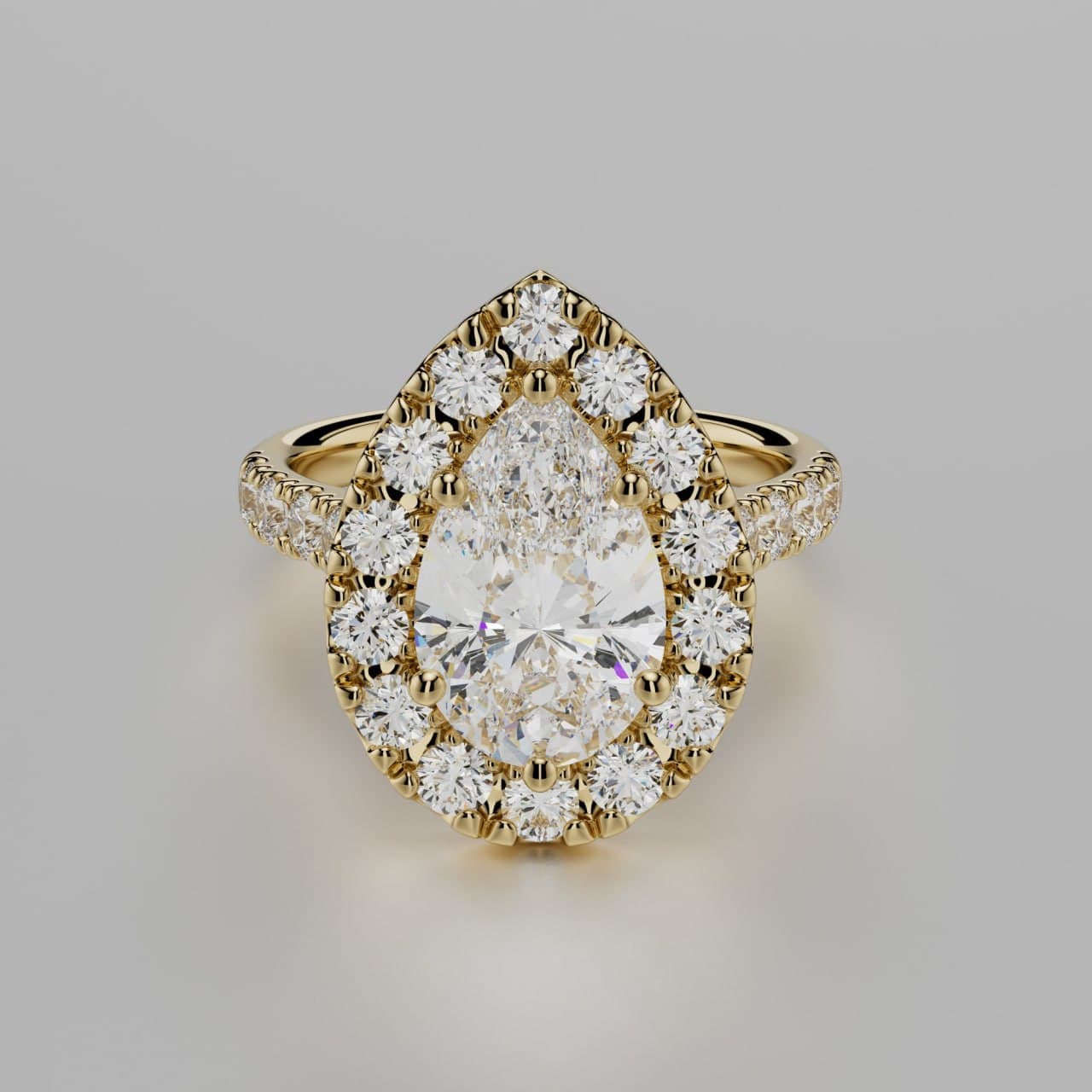
A customer sends you a Pinterest board and a one-of-a-kind idea — exactly the high-margin custom order every jeweler wants. But without a CAD artist on staff, you're left with three bad options: turn the work away, gamble on a freelancer you can't vet, or spend months and thousands of dollars building an in-house capability. There is a fourth path that has quietly become the standard for independent jewelers and growing brands: outsource the 3D work. Here's how it works, what it saves you, and how to do it without losing control of your design or your client.
The custom order you keep turning away
Custom and made-to-order work is where the real margin lives. It's also the work that builds loyal clients — nobody screenshots a stock piece to show their friends the way they show off a ring designed just for them. But every custom order runs through the same bottleneck: someone has to turn the idea into a precise, castable 3D model, and then into an image the client can approve before any metal is cut.
Without CAD in-house, most jewelers fall back on one of three losing moves. They decline the request and watch the revenue walk out the door. They hand-fabricate from a sketch — slow, hard to price, and impossible for anything intricate. Or they hire an unvetted freelancer and hope the files actually cast. Each declined or mishandled custom request is a sale and a relationship you don't get back.
Why building CAD in-house rarely pencils out
Bringing 3D design in-house sounds like control, but the math is unforgiving for most independent jewelers. It isn't one purchase — it's a standing cost you carry whether custom orders come in or not.
- Software: professional jewelry CAD (Rhino + MatrixGold or Matrix) plus ZBrush for organic sculpting runs into thousands of dollars a year in licenses.
- Talent: a skilled jewelry CAD artist is rare and expensive — and a generalist 3D modeler won't know casting tolerances, stone seats or prong mechanics.
- Learning curve: it takes months to reach production-ready output, and early mistakes are paid for in scrapped castings and lost stones.
- Utilization: unless you have steady custom volume, a full-time CAD seat sits idle — a fixed cost against unpredictable demand.
What outsourcing your CAD actually looks like
Outsourcing doesn't mean handing over your customer. It means plugging in an invisible production arm while you stay the brand and the relationship. The workflow is simple and repeatable:
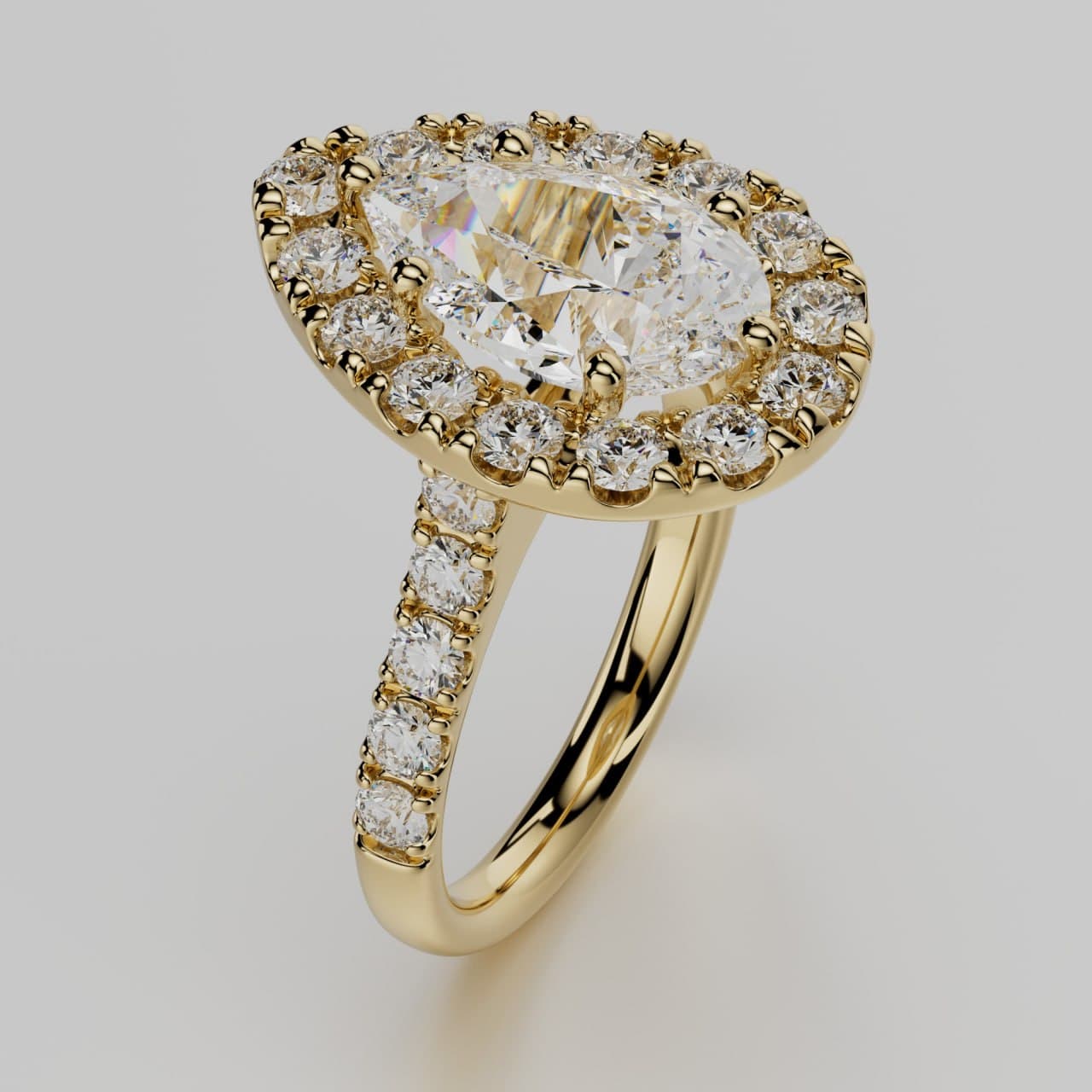
You send what you have — a sketch, a reference photo, a competitor's piece to adapt, or just a written description. The studio models it in CAD to real casting tolerances, then returns a photorealistic render and cast-ready files. You review, request changes, and approve. Then you hand the finished files to your caster or 3D printer and the images to your client. Your name is on all of it.
What you hand off — and what stays with you
The point is to offload the technical production, not the parts of the business that are yours. A good split looks like this:
- Hand off: CAD modeling (from scratch, from a sample, or corrections to an existing file), digital sculpting for organic and hand-engraved styles, photorealistic rendering, 360° turntables and on-body animation, and manufacturing-ready files in STL, 3DM, STP and OBJ.
- Keep: the client relationship, your pricing and margin, your brand, and final creative approval on every piece.
The business case: it makes custom profitable
Outsourced 3D doesn't just let you say yes to custom — it changes the economics of the whole category.
- Sell before you make: a photoreal render lets you take approval and a deposit before casting, so you're never funding speculative inventory.
- Fewer remakes: castability-checked geometry means the piece casts correctly the first time — no re-pours, no lost stones.
- Win more work: accept every custom request without adding headcount or turning designs away.
- Protect your margin: pay per piece, only when a paying order is in hand — a variable cost against real revenue.
- Faster turnaround: a studio built for this can hit a 24–48h target on a first CAD, so you can quote a real timeline with confidence.
How to choose a CAD partner
Not every 3D shop is built for jewelry. Before you send a design, make sure your partner can back a promise to your own client:
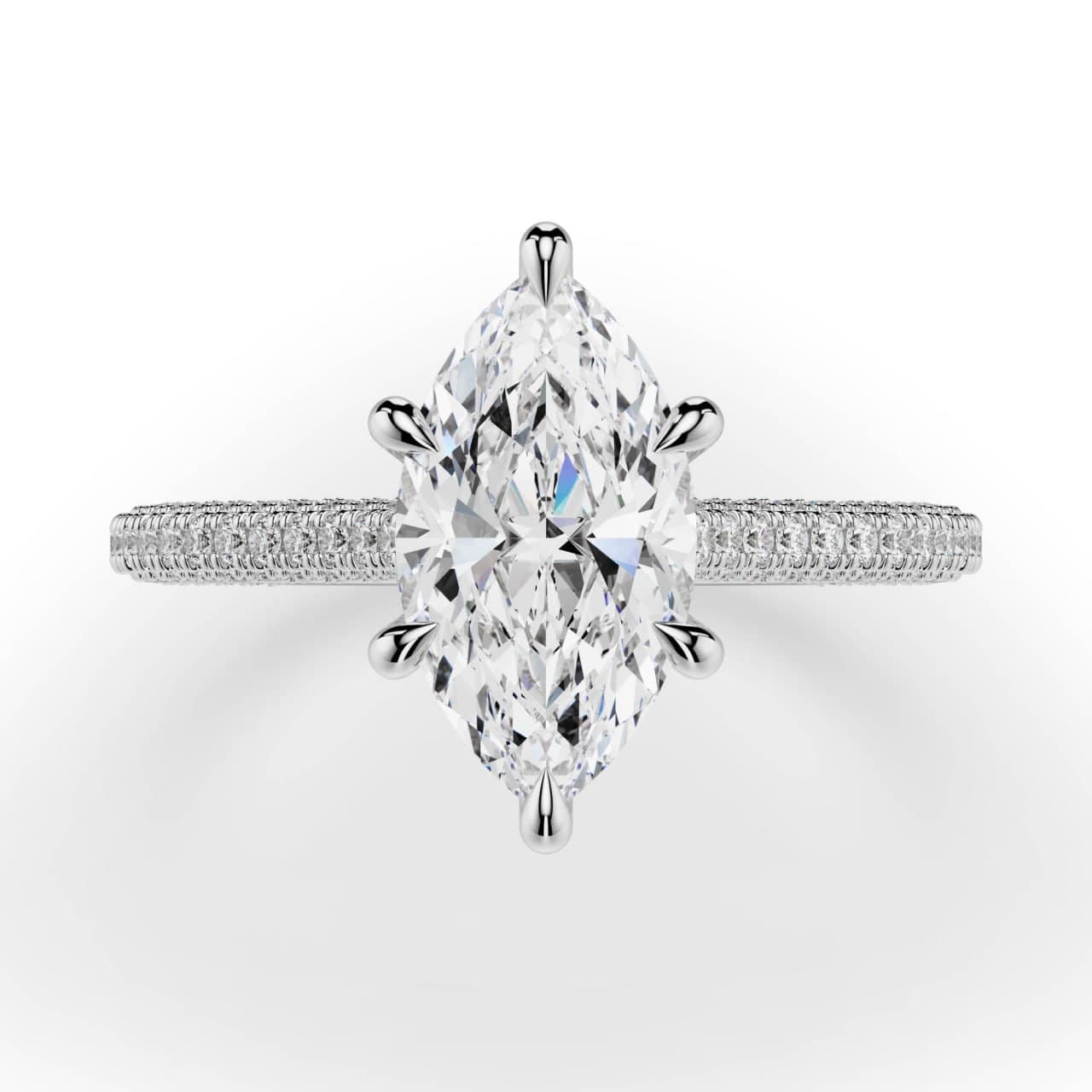
- Casting-aware modeling: they build to real tolerances — wall thickness, prong and gallery mechanics, correct stone seats — not just a pretty mesh.
- A clear revision policy: know how many rounds are included before you quote your client.
- The right deliverables: STL, 3DM, STP and OBJ, so your caster or printer gets exactly what they need.
- Rendering under one roof: when the model and the photoreal images come from the same team, your visuals and your production always match.
- Turnaround you can commit to, and communication that keeps you in the loop.
- Confidentiality and ownership in writing: your designs stay private and the files are yours.
Keep control: your design, your files, your client
The most common worry is that outsourcing means giving up authorship. It doesn't. You direct the design and approve every revision, so the finished piece is unmistakably yours. You own the delivered files outright and can take them to any caster. And a serious partner treats your ideas as confidential — your client never needs to know there was a studio behind the file, only that you delivered something extraordinary.
How it works with 4rend Studio
4rend Studio is that invisible production arm. You send a sketch, photo or description; we come back with a clear quote, then model your piece in Rhino, MatrixGold and ZBrush to manufacturing tolerances and render it photorealistically. You preview it, get up to two free revision rounds, and approve — then we deliver cast-ready files (STL · 3DM · STP · OBJ) and e-commerce-ready imagery under your brand.
Offer custom design like you have a full studio in the back — because now you do. Send us your first design and get a quote.
Key takeaways
- Custom orders carry the best margins, but they require castable CAD and client-ready renders.
- Building CAD in-house means costly software, a rare hire, a long learning curve, and an idle seat when volume dips.
- Outsourcing lets you accept every custom request, pay per piece, and sell before you cast — while you keep the client, brand and margin.
- Choose a jewelry-specific partner: casting-aware modeling, clear revisions, the right file formats, in-house rendering, and written ownership.
- You direct the design and own the files; the studio stays invisible behind your brand.
Frequently asked questions
Can you model a custom piece from just a sketch or a photo?
Yes. A jewelry CAD studio can build a production-ready model from a hand sketch, a reference photo, a piece to adapt, or a written description — refining it with you until it matches your intent.
Do I own the CAD files if I outsource the design?
With a reputable studio, yes — you own the delivered files (STL, 3DM, STP, OBJ) outright and can take them to any caster or 3D-printing service. Confirm ownership in writing before you start.
Will my client know the CAD was outsourced?
No. The studio works as your invisible production arm. The files and renders are delivered under your brand, and your ideas are kept confidential — your client simply receives a beautifully executed custom piece from you.
How much does outsourced jewelry CAD and rendering cost?
It's priced per piece by complexity, so you pay only when you have a paying order — no software licenses or salaries to carry. See our pricing guide for typical CAD and rendering ranges.
How fast can I get a model back?
A studio built for jewelry can target a 24–48 hour turnaround on a first CAD for standard pieces, so you can quote your client a realistic timeline and take a deposit against an approved render.
Further reading
Have a piece you need in 3D?
Fixed pricing, real-time tracking, manufacturing-ready files — delivered worldwide.
Request a quote